For anyone in London – or planning a trip this year – the Victoria and Albert Museum is non-negotiable. Here, fashion is treated as evidence of how we think, how we present ourselves, and how creativity shapes culture. Schiaparelli: Fashion Becomes Art (28 March – 8 November 2026) pushes this approach further than ever, presenting over 400 objects – 100 ensembles, 50 artworks, jewellery, accessories and archival treasures – that chart Elsa Schiaparelli’s career from her Paris debut in the 1920s to her London salon in 1933.
The exhibition places you inside her world: fanciful hats shaped like upside-down shoes, the 1938 Skeleton and Tears dresses, the surreal Lobster dress alongside Salvador Dalí’s Lobster Telephone, and collaborations with Jean Cocteau, Man Ray and Pablo Picasso. These aren’t just beautiful objects – they are conversations about identity, art and the radical possibilities of clothing.
At the V&A, fashion is never superficial. It’s analysed, reframed and positioned as part of a wider cultural dialogue, and this exhibition proves it beyond doubt. Schiaparelli: Fashion Becomes Art reminds the viewer that clothing can do more than decorate – it can provoke, challenge and inspire across generations.
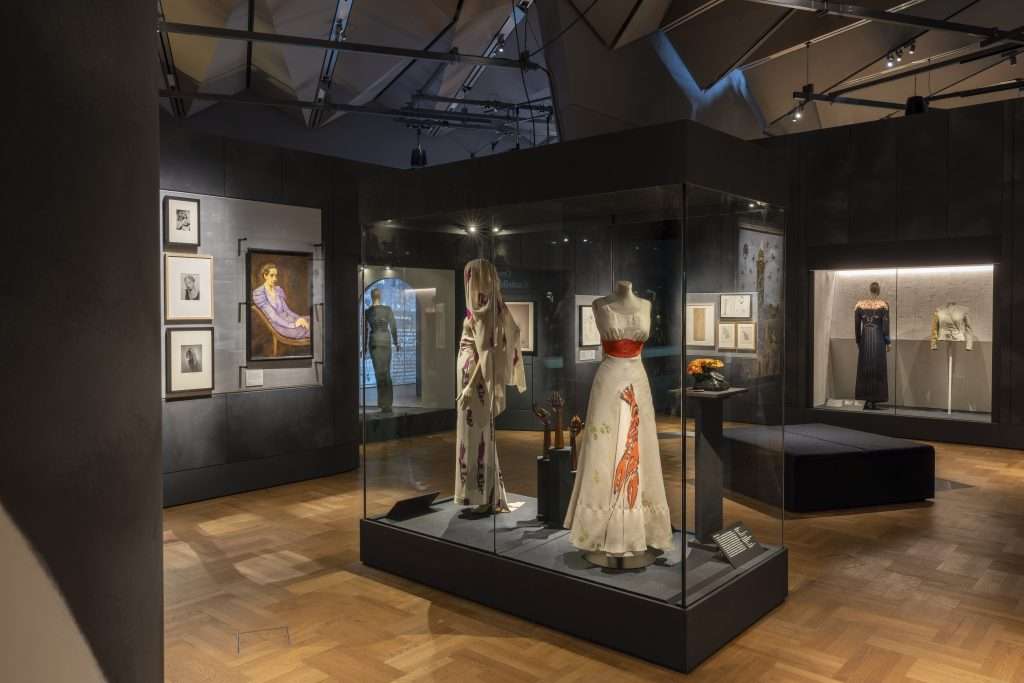
The exhibition makes it clear that Schiaparelli was far more than a stylist creating striking visuals. She was a thinker, an experimenter and a creator, using clothing as a way to challenge convention and explore ideas. As she famously said, “For me, dress designing is not a profession but an art.” This philosophy runs through every piece on display: trompe-l’œil jumpers from 1927, sharply tailored trouser suits at a time when women in trousers were still exceptional, shimmering lamé gowns that played with light and movement, and intricately detailed skirts and coats that combine technical skill with imaginative flair.
Each creation radiates such strong personality that it makes visitors wonder how a designer of that era could produce pieces that remain visually and culturally relevant today. Tristram Hunt, Director of the V&A, highlights this in the context of the exhibition: “Schiaparelli: Fashion Becomes Art celebrates one of the most ingenious and daring designers in fashion history. The V&A holds one of the largest and most important fashion collections in the world, and the foremost collection of Schiaparelli garments in Britain.”
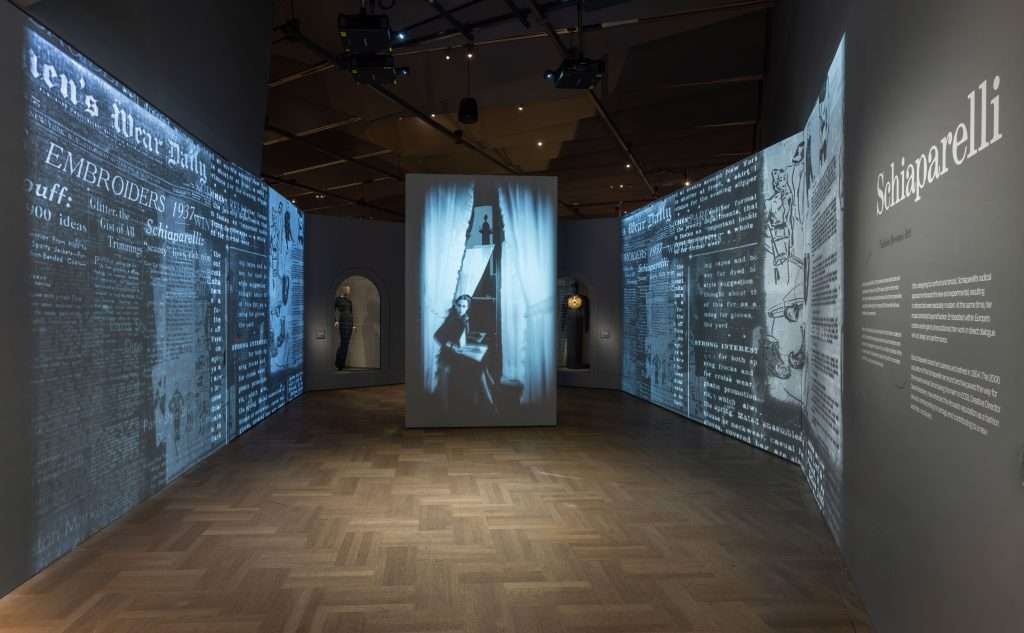
Her approach was radical not only in design but in business: turning ordinary objects into unforgettable creations, experimenting across fashion, fragrance and what we now call merchandising, blurring the boundaries between creative brilliance and commercial strategy.
The exhibition’s focus on Schiaparelli’s London salon, opened in 1933, reveals a chapter of her practice often overlooked. London was more than a satellite – it became a hub where she engaged with the British surrealist movement and extended her influence far beyond Paris. Garments from this period, from elaborately embroidered velvet suits to ceremonial coats worn at high-profile events, show how she adapted her vision to a new city while keeping it completely her own.
Seeing these pieces in the very city where they were first worn adds a dimension that photographs or reproductions cannot capture. The archive establishes a direct dialogue between past and present, illustrating how international her practice already was, decades before fashion embraced global networks and marketing strategies. The city itself becomes part of the story, emphasising the social and cultural contexts that shaped her designs.
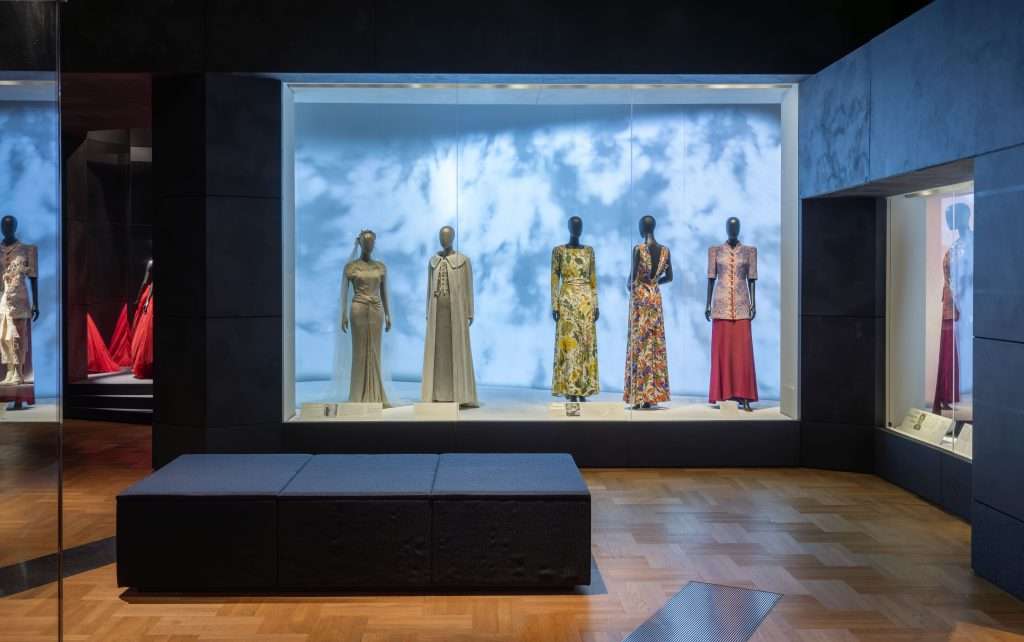
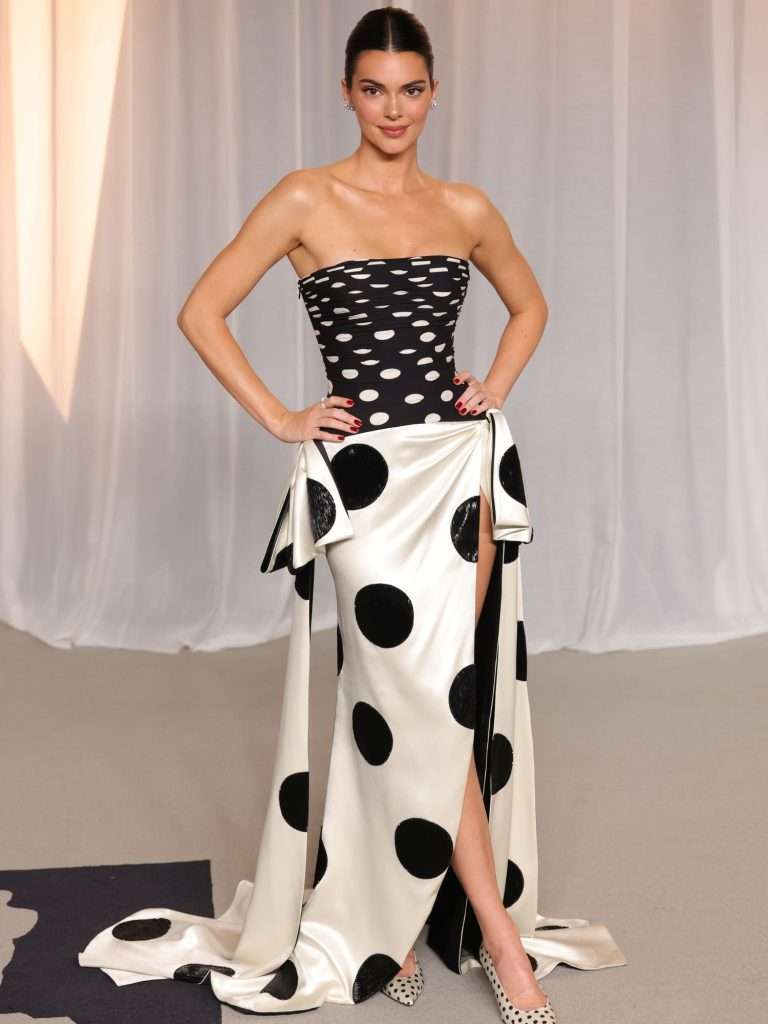
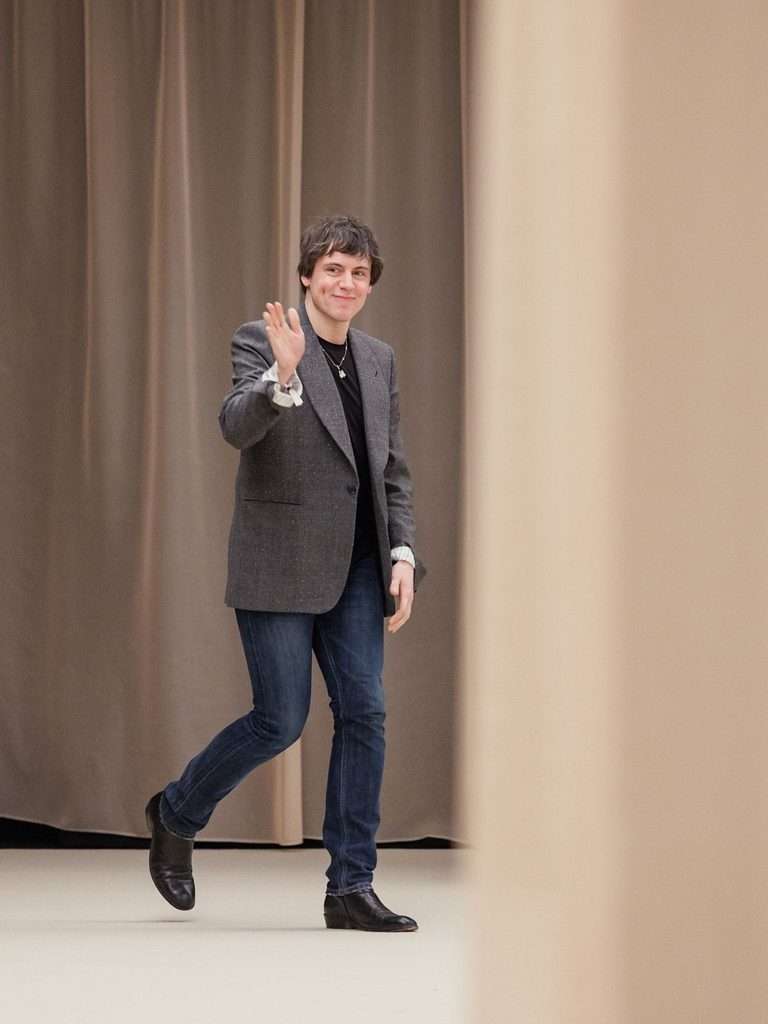
The final section of the exhibition is where history and today collide. Walking through the archive and arriving at Daniel Roseberry’s creations is a moment that stops you in your tracks. The 1938 Skeleton dress and Tears dress, icons of surrealist innovation, sit alongside Roseberry’s modern gowns, including the black-and-gold Skeleton dress worn by Dua Lipa at the 2024 Golden Globes and Ariana Grande’s glittering 2025 Oscars gown. The effect is electric: it’s not about copying the past, it’s about carrying a visionary legacy forward.
Roseberry reinterprets Schiaparelli’s core couture techniques – draping, embroidery, sculptural tailoring – through a contemporary lens. Silhouettes expand and exaggerate, forms grow more dramatic, and exquisite references fuse with today’s performance and red-carpet culture. As Delphine Bellini, CEO of Schiaparelli, says, he “carries her surrealist spirit forward, blurring lines with bold, sculptural designs that both honour and reinvent her vision for a new century.”
Experiencing these pieces up-close, it’s impossible not to notice the impact they have today. Every Schiaparelli fashion show or campaign makes headlines, dominates social media and sparks viral attention, and Roseberry’s designs continue that tradition. He has taken the House’s heritage and given it space to thrive in the modern world. The Maison isn’t just preserving history, but rather it is creating moments that feel as culturally resonant now as they did nearly a century ago.
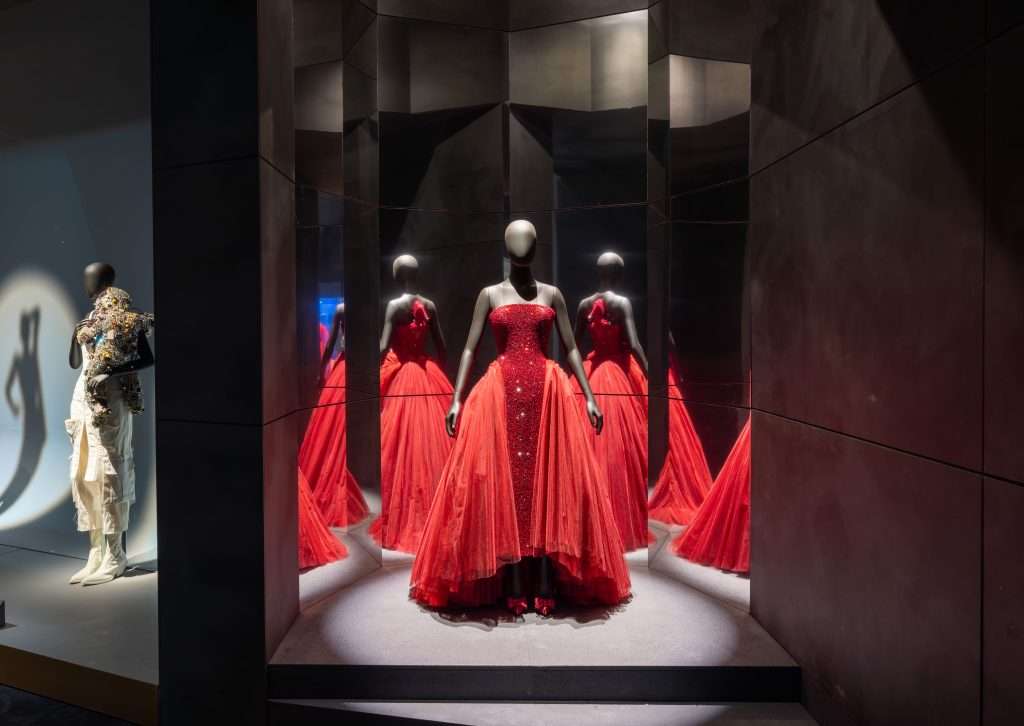
Roseberry’s gowns – whether echoing theatricality, referencing iconic silhouettes or reinventing sculptural motifs – make tangible the exhibition’s central idea that fashion can operate as art, with fabric, thread and form creating a language of ideas.
The pairing of past and present also underlines the House’s global reach and cultural impact. Schiaparelli’s collaborations with artists like Salvador Dalí, Jean Cocteau and Man Ray set a precedent for a practice that merges visual art and performance with fashion. Roseberry continues this approach, showing how a couture House can remain radical and relevant, nearly a century later, without leaning on nostalgia. The surrealist spirit is alive in every stitch and demonstrates that Schiaparelli’s legacy is not simply history but a living framework for creativity and imagination.
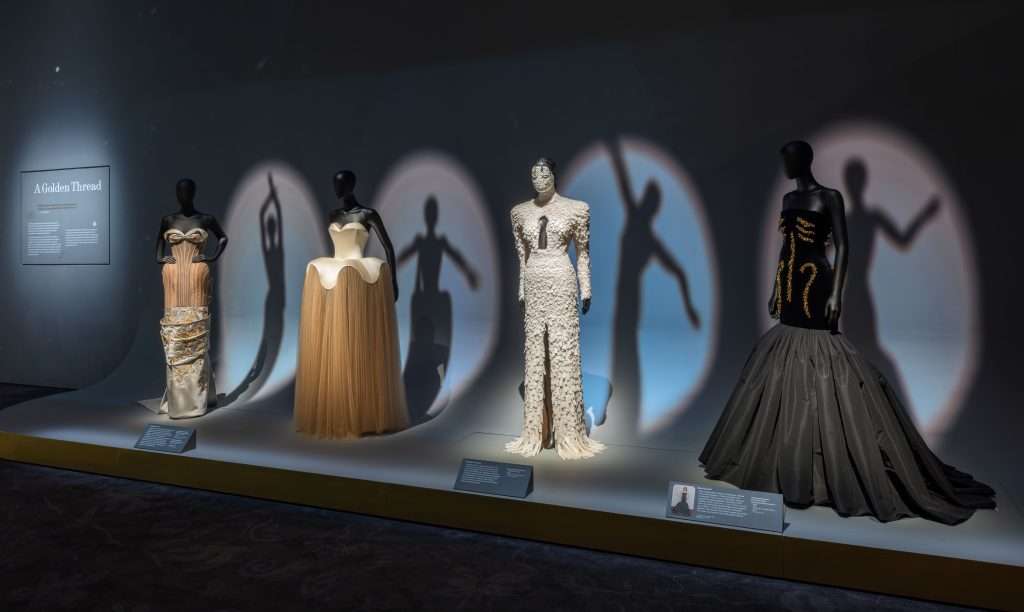
Schiaparelli: Fashion Becomes Art serves as a reminder that true fashion design isn’t about visibility or social media presence – it’s about thought, skill and imagination. Schiaparelli didn’t just make clothes; she made ideas you could wear, works that challenged perception and still resonate nearly a century later. Seeing Daniel Roseberry carry that energy forward proves the House is iconic.
In today’s world, it can feel like anyone with a sketch and a bit of financial freedom can call themselves a designer. Social media has made fashion more accessible than ever, and that’s exciting. But the numbers tell a clearer story: studies say around 80 % of new fashion brands fail within their first five years, and only 2–3 % of fashion designers build sustainable, long-term careers. Exhibitions like Schiaparelli: Fashion Becomes Art remind us that being a designer – the kind whose work belongs in museums, shapes culture, and carries a lasting artistic vision – is far rarer than it looks online. That doesn’t mean it’s impossible; for all the inspiring new voices, the exhibition demonstrates that standing out and enduring takes the kind of vision and craft that Elsa Schiaparelli embodied.
This exhibition is unmissable. Rather, it is essential for any London itinerary. It affirms that fashion, at its highest level, is a form of art, and experiencing Elsa Schiaparelli’s work alongside Daniel Roseberry’s contemporary creations is nothing short of a privilege. True creativity possesses the power to arrest attention, even briefly, offering reflection, provocation and insight. Through this exhibition, Schiaparelli- and now Roseberry – demonstrate the imperishable force of fashion as a medium for artistic expression. Book now