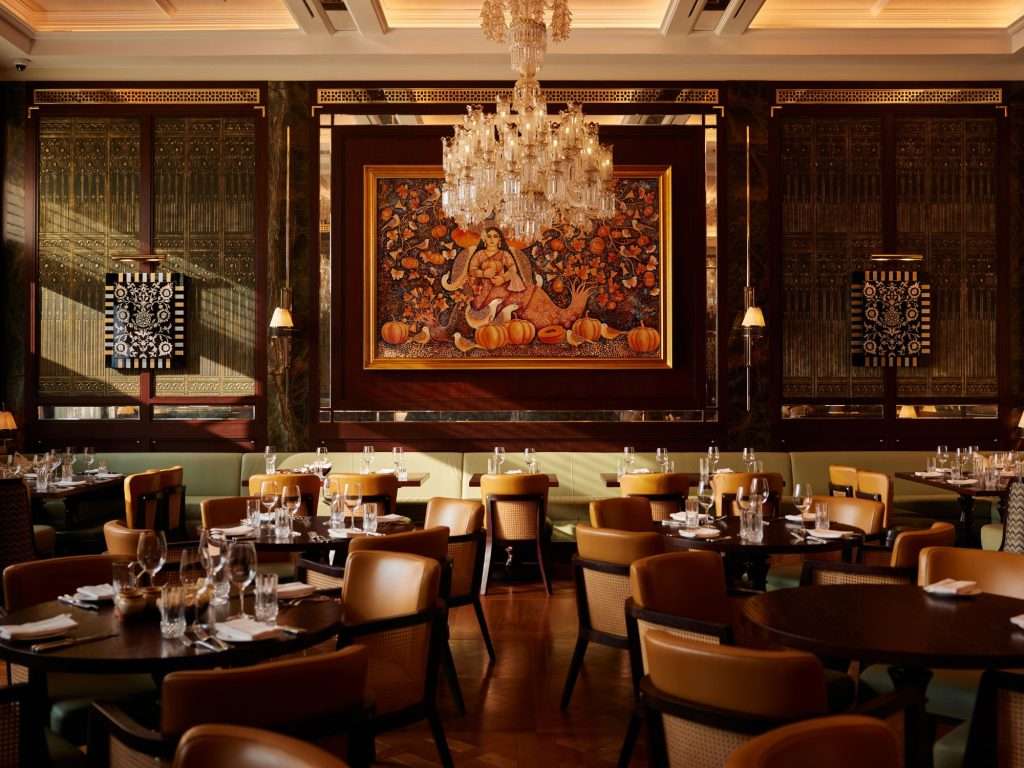
When psychologist, parent educator and entrepreneur Sarah Raslan realised that weekends spent in overstimulating play spaces were leaving her feeling disconnected from loved ones, she set out to create a space that not only entertains and educates children, but gives parents the opportunity to connect, too. Located in Q East by Alphabeta, a new development in Al Quoz, Dubai, NESTT is a lifestyle destination offering psychology-backed play spaces for children, alongside a café and co-working zones for adults.
In conversation with MOJEH, Sarah discusses the importance of play, intentional interior design and what sets NESTT apart from the overstimulating environments families are often forced to endure.
MOJEH: How did the creation of NESTT, and the collaboration with Haider Madani, come about?
Sarah Raslan: NESTT came about three and a half years ago. My husband Tarek and I had two young children, and we realised we were spending every weekend in noisy, overstimulating play areas with loud music, mediocre food and bad coffee. Ambiance and atmosphere were things we had always valued before having kids, and we suddenly found ourselves without them.
There was also a social side to it. Many of our friends, cousins and family members didn’t have children yet, and we barely saw them anymore. We were at play areas on the weekends, and they were at great brunches and lunches with good music in places that weren’t designed with children in mind. We were losing touch with people we loved.
We used to spend a lot of time at Cassette, one of Madroom’s concepts, and we kept saying to each other, “We wish there was a place like Cassette, but for kids.” That was really the starting point.
We have known Haider and the Madroom team personally for many years, and Cassette always felt like home. So we pitched the idea to them: a space that recreates that feeling for the whole family, and for the community around it. They understood the pain point immediately. We were aligned from day one, and it has been a beautiful partnership ever since. Three and a half years and six new babies between the partners later, we’re finally here.
Can you walk us through the space?
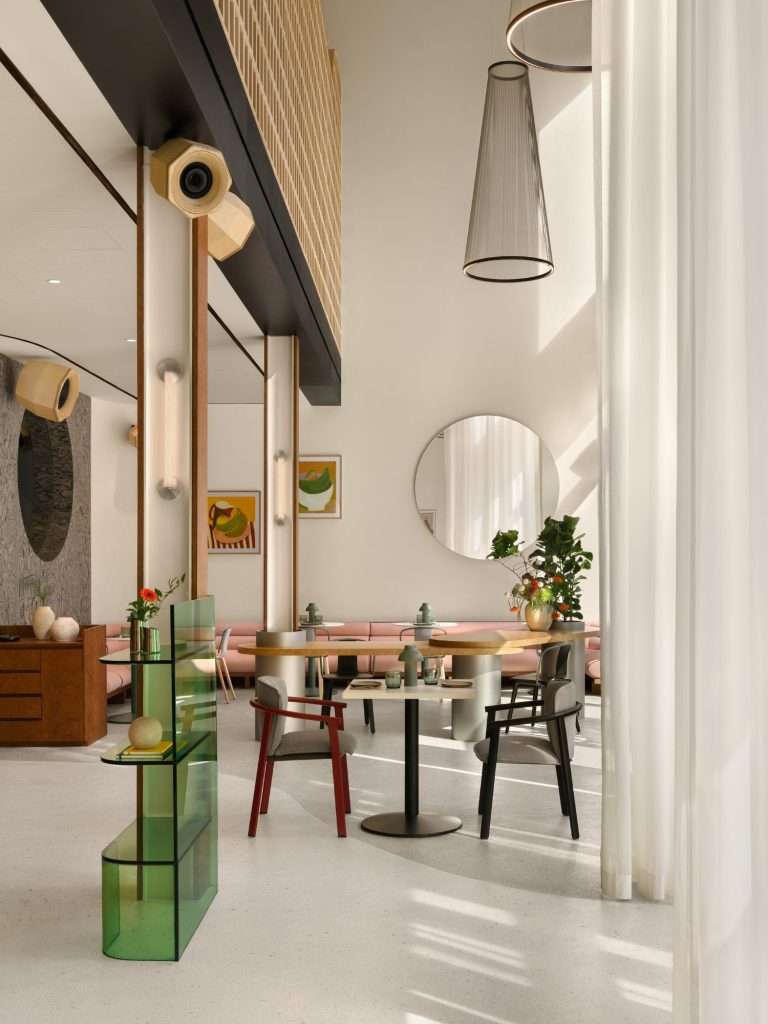
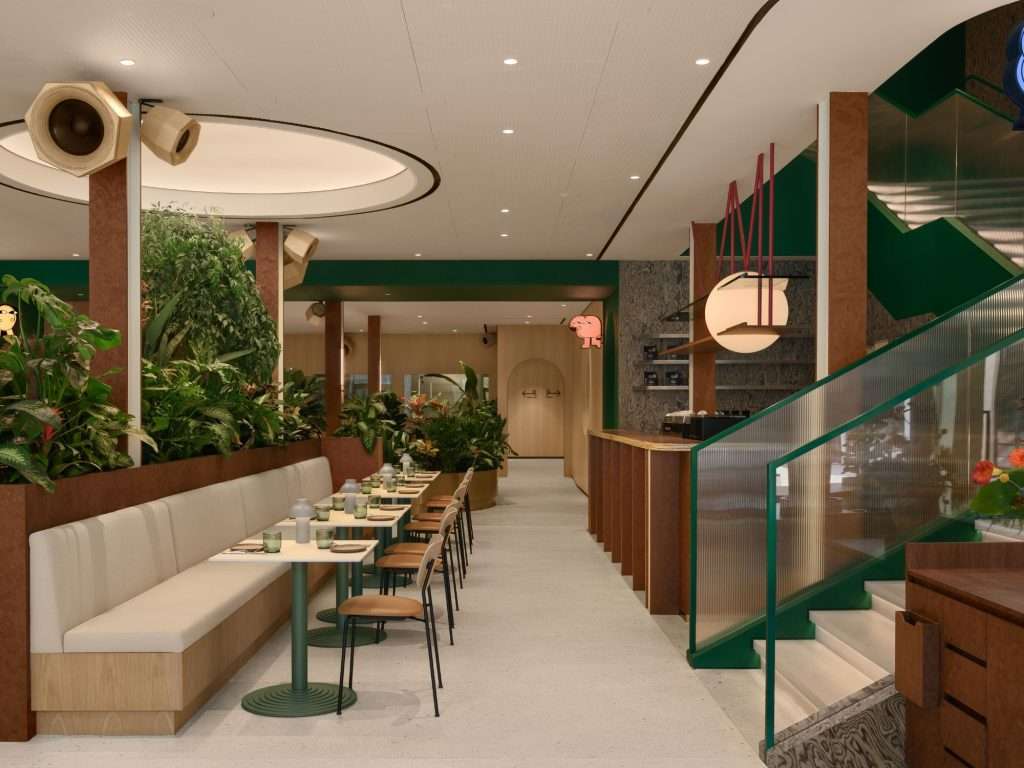
There’s a beautiful lounge and seating area at the front. This is the slower-paced, low-tempo part of the space. Further in, you’ll find plenty of dining areas. Running alongside the main staircase is a slide, open to children and adults alike. We wanted to bring playfulness into the restaurant itself and invite grown-ups to tap into their own inner child.
Downstairs are two multi-purpose studios where we’ll host workshops for young children, for older children who may have outgrown the play areas, and for adults who want to join in with their kids. When there are no events, these rooms stay open as quieter spaces: somewhere to curl up in a reading nook, do homework, or play a board game or building game.
The play itself is divided into two zones: one for ages zero to three, and one for ages three to eight.
The three-to-eight journey begins downstairs, in the canopy of a forest. It’s green and lush, and it really embodies the nest theme, with little treehouses that some say look like honeycombs. Below them is a role-play area that follows the forest theme.
From there, children climb up through one of the tree trunks and come out in the larger playground upstairs. This room is all blues and whites, and the wallpaper shows children above the trees, in the clouds, with our NESTT characters catching stars. A net maze makes you feel like you’re bouncing through the clouds. We took inspiration from outdoor playgrounds here: lots of open space and room to run. That was deliberate. We designed this room for open-ended play, so children can be creative, let their imaginations roam, and never get bored, no matter how often they visit.
The three-to-eight zone also includes the Wonder Room, our slower-paced space for children who want a moment to draw, build and create. It’s filled with beautifully designed, open-ended building toys sourced from Europe and the US, which appeal to older children too. We’ve deliberately kept the room flexible, as we’ll keep reinventing it with sensory play, messy play and workshops.
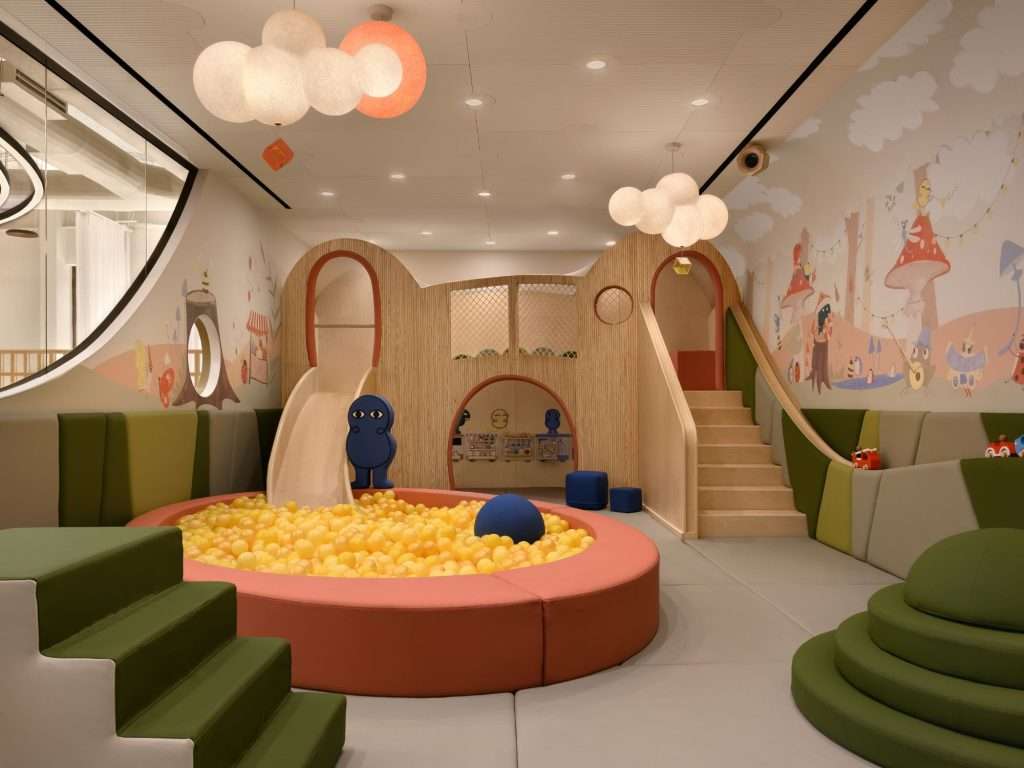
The zero-to-three room is separate, for the little ones’ safety. It’s bright and colourful, in soft yellows and oranges, and everything is padded and cushioned. There’s plenty of room to crawl, role-play, and build both gross and fine motor skills. We noticed a real gap for under-threes in other venues: very few places let them roam freely and be challenged in a dining setting. We wanted to create a cozy, safe space where they can do exactly that.
What is the importance of play in child development and what transferable skills are learned during play?
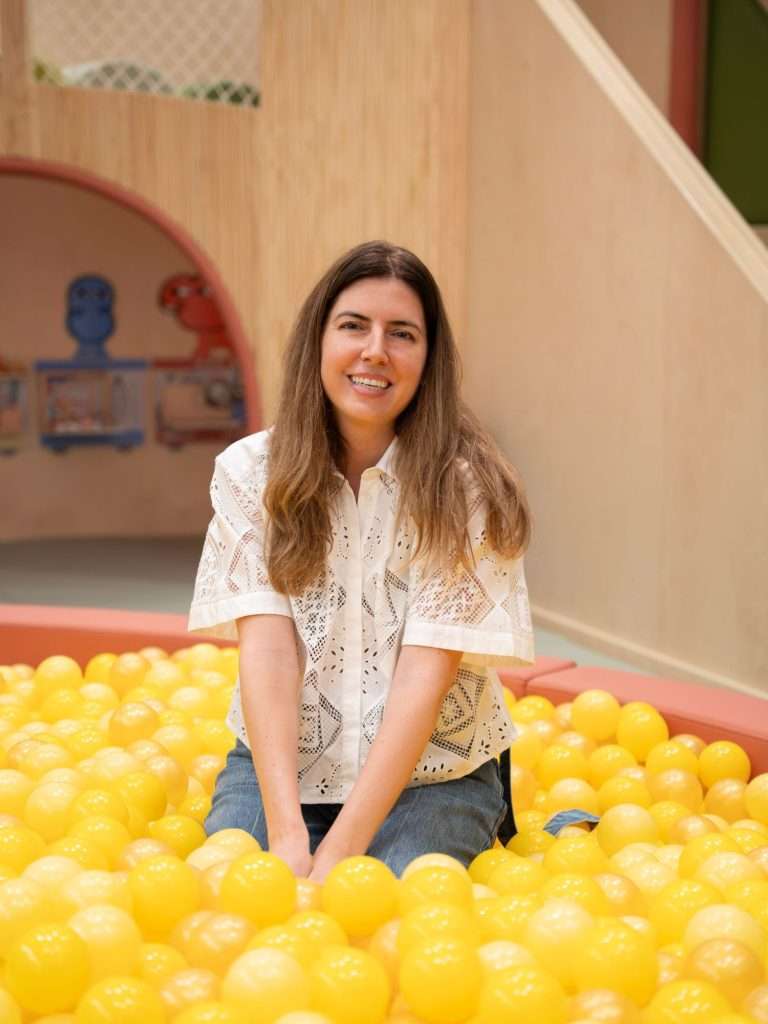
Play is how children learn. It isn’t a break from development; it is development. The American Academy of Pediatrics made this point in its 2018 report The Power of Play, which encouraged paediatricians to “prescribe” play, because it builds the brain, the body and the relationships children need to thrive. The UN Convention on the Rights of the Child even recognises play as a fundamental right.
The psychologist Lev Vygotsky observed that in play, a child acts beyond their age, almost as if they were a head taller than themselves. When a four-year-old plays shop, they practise waiting their turn, following rules, using language and staying in role. These are things they would struggle to do on demand in “real life.” Play is the rehearsal space.
Research from Harvard’s Center on the Developing Child shows that play is one of the most powerful ways children build executive function: the ability to focus, hold information in mind, control impulses and adapt. These are the skills that later predict success at school and in relationships.
Through play, children learn sharing and negotiation, patience and self-regulation, empathy and compassion, resilience and risk assessment, and creativity and problem-solving.
These lessons don’t stay in the playroom. The child who learned to wait for the slide is better equipped to wait their turn to speak in class, and the child who negotiated a pretend game is better at navigating a disagreement with a friend.
What are the design elements that make NESTT both educational and exciting for children?
The most important design principle at NESTT starts with the brain. Children can only learn when they feel safe. When a child is overstimulated, insecure or overwhelmed, their nervous system shifts into survival mode, and they can’t access the higher parts of the brain responsible for thinking, imagining and learning. When their nervous system is calm, those parts switch on. So every design decision, across both the restaurant and the play areas, was made to avoid overwhelming children, so they can play, create and learn.
That’s why the space is full of soft, rounded shapes, real plants and soothing colours. Neuroscience research has found that people judge curved interiors as more beautiful than straight-edged ones, and that curves engage the brain’s emotional centres. Sharp angles tend to read as a subtle threat, while curves signal safety.
Within that calm, we built in the unexpected, because novelty is what sparks curiosity, and curiosity is what drives learning. In the play areas, the floor bubbles up and down instead of lying flat, so children can run up and over it. Elements rise vertically and stretch across the space, inviting children to crawl through, climb up and explore. Research on outdoor play shows that children who play on sloped and uneven terrain develop better balance and coordination than those on flat playgrounds, so these features build gross motor skills while feeling like pure fun.
The role-play areas and open-ended toys let children practise real-life scenarios, interact with other children, and follow their own imagination and curiosity. Building and creating in the Wonder Room develops fine motor skills, while climbing, crawling and running through the playground develop gross motor skills. Children don’t experience any of this as “learning,” which is exactly why it works.
What are the biggest red flags you have seen in ‘traditional’ play spaces?
I think we often cheapen children’s experiences. We assume children need more to hold their attention, so traditional play spaces, especially the new ones popping up, keep adding more slides, more sound, more lights, more ball pits. But the more we cram into a space, and the louder and brighter it gets, the more overstimulating it becomes.
The biggest red flag for me is what I see when there’s too much to do: children become overwhelmed by choice. They jump from one structure to the next without ever fully engaging with anything, and they leave with their senses overloaded. That isn’t play.
The same goes for sound. Music in traditional play spaces tends to be loud, overwhelming and offers children very little. At NESTT, even the music in the kids’ areas isn’t typical children’s music. We play timeless classics that are age-appropriate but appeal to parents too, and it’s something parents have really noticed and appreciated when they come in to play with their children.
Food is another one. There’s an assumption that children’s food outside the home means junk food. Our kids’ menu has the familiar favourites children look for, all made with clean, high-quality ingredients, but we also offer more variety and more elevated dishes to gently open their palates and encourage them to try new things.
How did you ensure NESTT would remain a calm, encouraging space without compromising on fun?
The key was separating the energy without separating families. The play areas are enclosed in double-glazed glass, which keeps the sound in. Parents can see their children at all times, but the wild, loud excitement of play doesn’t spill into the dining space. Children get to be as noisy and free as they like, and adults still get to enjoy a calm meal. Nobody needs to compromise.
We also use music and lighting to shape the mood. Both are adjusted throughout the day, and between weekdays and weekends, to match the pace of the space, so the atmosphere always feels right for the moment rather than running at one constant, high-energy level.
Working with children requires the ability to recognise both verbal and non-verbal cues. How have you ensured that NESTT’s team is able to do so?
As a psychologist, a parenting educator and a mother, this was one of my top priorities when it came to training our team.
We train multiple times a week, re-enacting different scenarios together. Our play attendants, and even our F&B team, learn to recognise when a child is feeling uncomfortable, when they’re more reserved, or when they’re overexcited, through both what they say and what their body is telling us. From there, the team learns how to gently guide children towards the zone of play that best matches their temperament and energy level in that moment.
I’ve also taken it a step further, which I think is quite unique to NESTT: I train our staff in basic child psychology. That means understanding how to use both body language and verbal language to help a child feel safe and comfortable, in our space and with our team. They learn how to approach children, and how to communicate with them using positive, conscious language.
What would you say to parents that don’t believe play spaces can be educational?
I’d say: children are learning all the time, whether we intend them to or not. They are sponges. Think of a child in the back seat of the car, singing along to the radio. They’re still listening to every word their parents say in the front. Children are constantly observing and absorbing their environment.
The science backs this up. Harvard’s Center on the Developing Child estimates that in the first few years of life, a child’s brain forms more than a million new neural connections every second, and experience shapes which of those connections grow stronger. So the question isn’t whether a child is learning in a play space. It’s what they’re learning, and whether the environment supports it.
For children, play is learning. In a play space, they’re doing things they can’t practise anywhere else. They have to negotiate with children they’ve never met, figure out how to join a game, take turns, and resolve conflicts without an adult stepping in. They’re challenging their bodies by climbing, balancing and crawling through structures, and taking calculated risks. A major review of the research found that environments where children can take healthy risks lead to more play, more social interaction, more creativity and greater resilience.
Those are the skills that carry them through school, friendships and life. They just happen to be learning them while having the best time. Learn more about NESTT here