
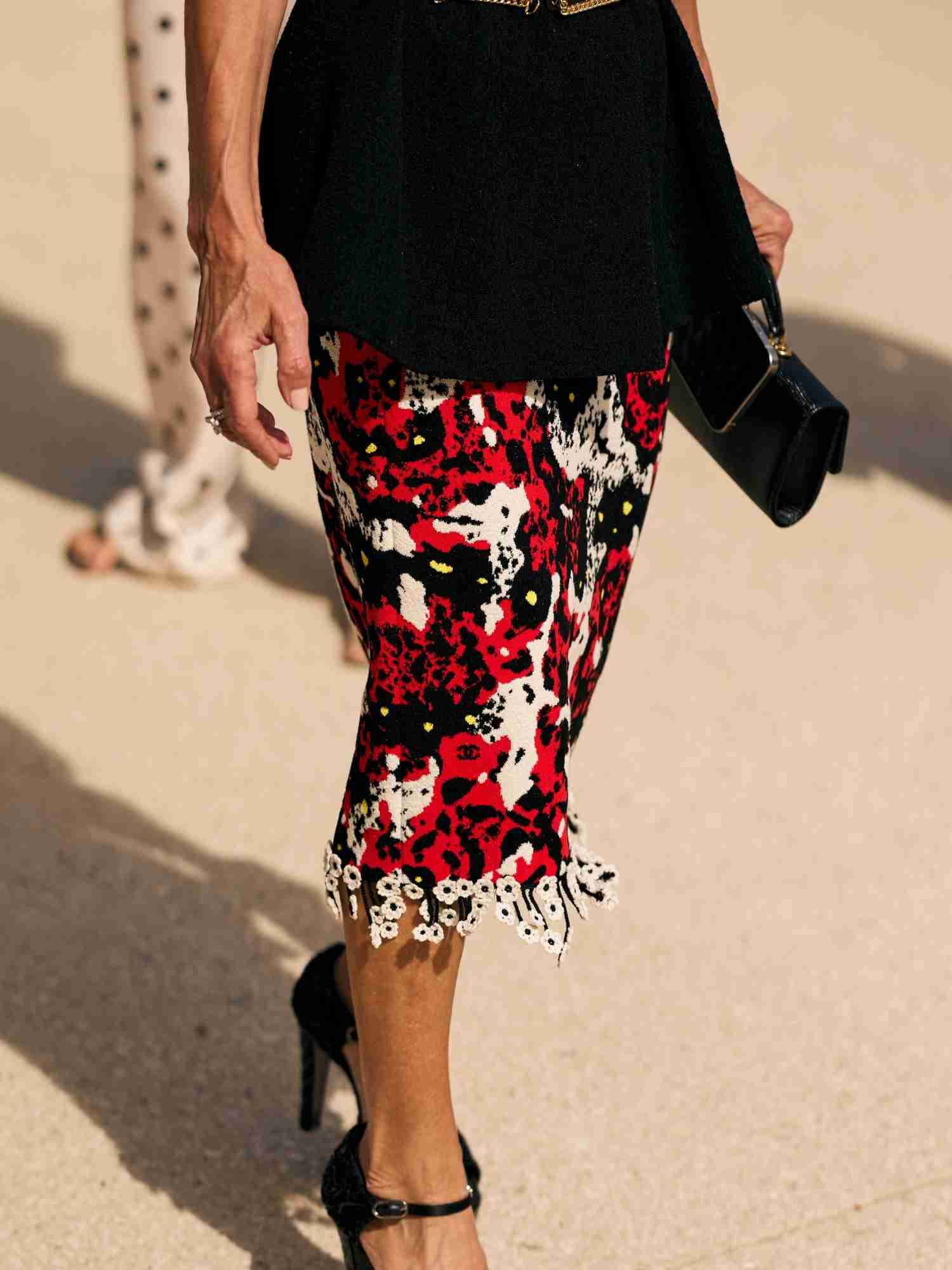
Place a pencil skirt and a circle skirt of equal length side by side, and nearly all distinctions appear below the hip. The different skirt shapes are determined at the worktable by several choices: the degree of fit at the waist and hip, where the fabric is permitted to widen, and the direction in which the grain runs through the fabric. Collectively, these decisions establish the silhouette the outline recognised across a room. This skirt shape guide details how each skirt cut functions, compares the primary types of skirts in one table, and illustrates how certain skirt silhouettes balance various proportions, so the next selection is based on its line rather than its name.
What Skirt Shapes Are and How They Differ From Styles
A skirt shape describes the outline a skirt maintains from waist to hem, whereas a skirt style refers to the features added to that outline such as a slit, a pattern, length, or fabric choice.
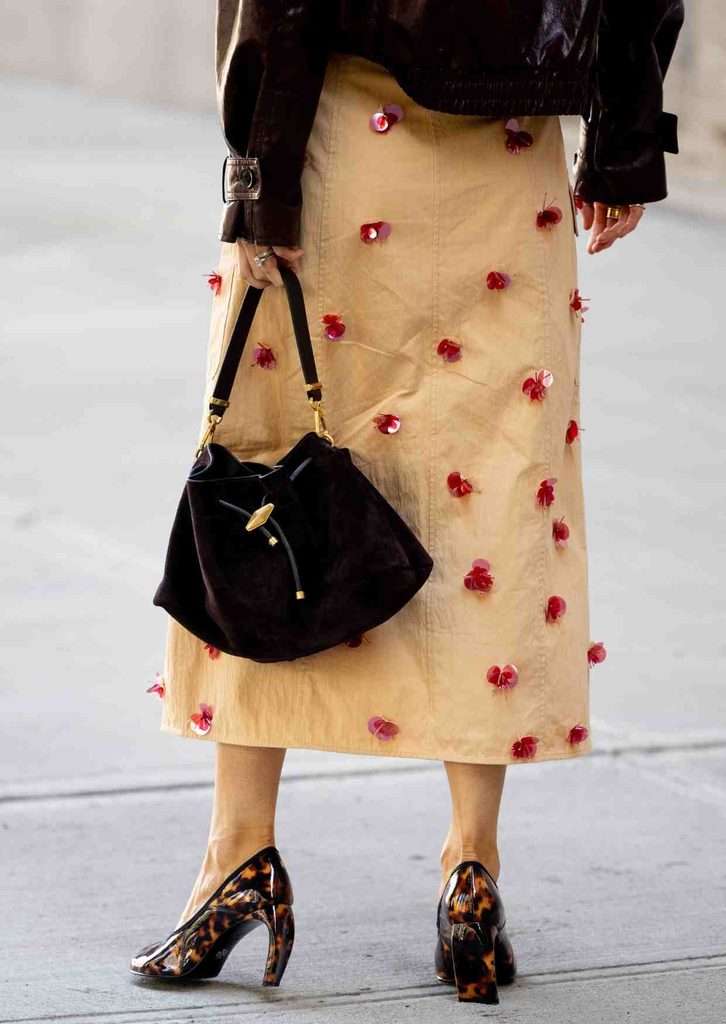
These terms are often used interchangeably in retail, but a silk midi and a pleated midi, though sharing a length, may belong to different skirt silhouettes and rest on the body in distinct ways.
Pattern cutters define skirt shapes using three measurements: the waist, the widest point of the hip, and the hem’s circumference, called the sweep. If the sweep is less than the hip, the skirt tapers; if equal, it falls straight; if greater, it flares. Almost all types of skirts fit into one of these categories. Assess the shape first a hem can be shortened easily, but altering the sweep of a completed skirt usually requires recutting.
How a Skirt Cut Creates Its Silhouette
A skirt cut establishes its silhouette through choices about where the fabric fits the body and where it is released to stand away from it.
Three elements largely determine this, and they explain how skirt shapes create silhouettes more precisely than a list of names, as terminology varies but construction remains constant. Understanding these makes most skirt cuts instantly recognisable.
Waist Fit and the Starting Point of a Skirt
Darts, seams, and waistbands eliminate the excess fabric that would otherwise sit between hip and waist. A contoured yoke a shaped band across the upper hip lowers the starting point of pleats or gathers, keeping bulk away from the stomach.
Hem Sweep and Where Volume Is Released
Additional volume is introduced lower in the skirt via gores vertical panels that widen towards the hem through godets, which are triangular inserts set into seams, or by cutting the entire skirt from a circle. The higher the volume is released, the softer the silhouette; the lower it is released, the more dramatic and pronounced the flare becomes.
Fabric Grain and Weight in Skirt Construction
Woven fabric remains stable along its straight grain and offers some give on the bias, which runs diagonally at 45 degrees to the selvedge. Fabric weight is equally significant. Wool gabardine, silk faille, or brocade maintain a flare, while silk crepe de chine falls into gentle vertical folds so always check the composition label before considering the size.
Different Types of Skirts Compared by Silhouette
Most types of skirts are classified as either tapered, straight, or flared, while pleated, wrap, and bias-cut skirts can span these categories depending on their construction.
The following table organises the main skirt shapes according to two key factors: the degree of fit at the hip and the starting point of added volume.
| Skirt shape | Fit at the hip | Where volume begins | Silhouette created | Suits best |
|---|---|---|---|---|
| A-line | Skims | At the waist, gradually | Soft triangle | Most proportions, especially fuller hips |
| Pencil | Close | None; tapers to the hem | Narrow curve | A defined waist |
| Straight | Close | None; hem matches hip | Vertical column | Straighter frames, longer torsos |
| Full or circle | Loose | At the waist | Wide bell | A narrow waist, broader shoulders |
| Pleated | Varies | Where pleats are released | Vertical movement | Depends on stitching point |
| Wrap | Adjustable | Along the overlap | Diagonal line | Most proportions |
| Bias-cut | Follows the body | Gently, from the hip | Fluid and close | Smooth lines |
| Trumpet | Fitted to mid-thigh | Mid-thigh | Gradual flare | Curves with freedom to move |
| Mermaid | Fitted to the knee | At or below the knee | Sharp flare | A defined hourglass |
The A-Line Skirt and Its Controlled Flare
An A-line skirt is fitted at the waist and gradually widens towards the hem, forming the triangular shape that inspires its name.
Christian Dior introduced the term with his A-line collection in spring 1955. Its appeal lies in its structure: the flare starts at the waist yet remains gentle, allowing the skirt to skim the hips without adding width at their broadest point.
Cotton poplin and double-faced wool maintain the shape crisply, while silk lends a softer drape. For an ankle-length A-line skirt, a wider sweep is required; otherwise, it may appear straight from afar.
For fuller hips, select an A-line skirt with a flat-front waistband and no gathers, ensuring a smooth start to the line so the flare achieves the balance. This skim-not-cling quality also makes the shape fundamental to a modest capsule wardrobe, where coverage and comfort are as important as silhouette.
How a Pencil Skirt Differs From a Straight Skirt
A pencil skirt tapers from the hip towards the hem, whereas a straight skirt falls vertically from the fullest part of the hip without narrowing.

This taper gives the pencil skirt its precise and exacting nature. As the hem is narrower than a natural stride, it requires a back vent, kick pleat, or slit for ease of movement, and it demands a fabric with sufficient structure such as wool gabardine, double crepe, or fine bouclé to maintain its line.
The straight skirt maintains its sweep equal to the hip, resulting in greater ease of movement and a clean vertical column rather than a curve. Paired with a matching jacket, either skirt forms the base of a power suit; the pencil skirt appears sharper, while the straight cut offers a more relaxed impression.
Opt for a pencil skirt if the waist is defined and the goal is to accentuate the curve from hip to knee. Select a straight skirt for a straighter figure, a prolonged working day, or a longer torso that suits an uninterrupted line.
Full and Circle Skirts Built From Fabric Volume
A full skirt introduces its volume at the waist, either with gathers and pleats or by being cut from a circular piece of fabric.
Christian Dior’s Bar suit of 1947 a tailored ivory jacket over a deeply pleated black skirt cemented the full skirt as the signature silhouette of post-war haute couture.
A circle skirt is cut as a ring, with the waist as the inner edge and the hem as the outer, allowing the fabric to fall in uniform folds all around. A half-circle skirt requires less fabric and yields less volume. Since portions of the circle hang on the bias, a well-crafted full skirt is left to hang overnight before hemming to allow the fabric to settle.
Taffeta and faille provide the fullest shape. Full skirts complement a narrow waist and counterbalance broader shoulders, provided the top remains fitted to keep the waist as the focal point.
Pleated Skirt Types, From Knife Pleats to Sunray
A pleated skirt reserves its fullness within folded fabric, appearing slim when still and expanding as the wearer moves.
The character of the skirt is determined by the pleat type:
- Knife pleats direct each fold in the same direction, creating a crisp, linear effect reminiscent of the kilt.
- Box pleats pair folds that face away from one another, forming structured volume.
- Inverted box pleats converge on the front of the skirt, resulting in a flatter appearance.
- Accordion pleats are slim, heat-set folds that provide the most fluid movement.
- Sunray pleats are heat-set onto a circular cut, with each fold widening from waist to hem.
Issey Miyake took the technique further with Pleats Please, launched as a standalone line in 1993, by pleating garments after they were sewn rather than pleating the cloth first.
The placement of stitched pleats is as important as their type. Pleats fixed flat to the hip create a smooth line over the stomach, releasing fullness below—an ideal option for a fuller midsection. Pleats released at the waist introduce volume immediately from the top.
The Wrap Skirt and Its Diagonal Line
A wrap skirt consists of a single panel crossing at the front, fastened by a tie, button, or buckle, which creates a diagonal line from waist to hem.
This diagonal line disrupts horizontal width at the hip and draws the eye downward, making the wrap skirt among the most adaptable skirt styles for diverse proportions. The waist can also be adjusted with every wear.
A minimal overlap reveals itself with each stride, while a deeper overlap—at least the width of a hand—remains closed. Silk twill and crepe fabrics follow the diagonal line without bunching at the tie. For greater coverage and ease, opt for a midi wrap skirt featuring a substantial overlap and a tie positioned at the side seam rather than centre front, where a knot may add bulk.
Why a Bias-Cut Skirt Drapes Closer to the Body
A bias-cut skirt is constructed with the grain running diagonally at 45 degrees to the skirt’s length, allowing the woven fabric to stretch subtly and mould to the body’s contours.
French couturière Madeleine Vionnet, who opened her Paris atelier in 1912, transformed the bias from a trimming detail to a method for cutting entire garments; her bias-cut gowns defined the eveningwear of the 1920s and 1930s. The modern slip skirt applies the same technique.
Bias-cutting requires considerably more fabric, and the skirt should be hung before hemming to allow the fabric to settle. This cut tends to reveal what lies beneath. Silk charmeuse and satin-backed crepe are the classic fabrics, while a densely woven sustainable silk offers the same fluid drape with a traceable origin.
A bias-cut skirt flatters smooth lines and requires confidence with how it clings. For a gentler effect, choose a heavier satin-backed crepe in a midi length, which skims instead of clinging.
Mermaid and Trumpet Skirts and Where Each One Flares
A trumpet skirt remains close-fitting to about mid-thigh before gradually flaring, whereas a mermaid skirt maintains its fit to the knee or just below, then flares dramatically.
The flare point marks the key distinction. Both styles typically use godets or flared gores set into a fitted upper skirt. The mermaid skirt often features a separate flounce attached at the knee, creating its signature fishtail effect.
The mermaid skirt’s fitted section through the knee shortens the stride and makes sitting a purposeful act, whereas the trumpet skirt’s higher flare allows for freer movement. Both are staples of bridal fashion and eveningwear, and the trumpet adapts well as a midi skirt for daytime wear.
Opt for a trumpet skirt for long evenings or dancing, or to flatter a petite frame, as a very low flare may visually shorten the leg. Reserve the mermaid skirt for occasions focused on standing and arrival, and for those with a distinctly defined hourglass figure.
Choosing Skirt Silhouettes for Your Proportions
The most effective way to select a skirt is to align the point of released volume with the area you wish to draw the eye towards.
The above construction principles make selecting skirt silhouettes for women far more precise than any body-shape categorisation:
- Fuller hips and thighs: an A-line skirt, a trumpet skirt, or pleats stitched to the hip, all styles that release volume below the broadest point.
- A defined waist with balanced hips and shoulders: a pencil skirt, bias-cut skirt, or mermaid skirt, each tracing the curve rather than concealing it.
- A straighter figure: a full skirt, circle skirt, or box-pleated skirt, which creates the illusion of a waist by contrast.
- Broader shoulders: a full skirt or A-line skirt, which adds width below to balance the upper body.
- A fuller midsection: opt for a flat-front waistband, contoured yoke, or wrap skirt, avoiding gathers at the waist.
If both shapes are suitable, allow the fabric to guide your choice. The fabric with greater body will best maintain the silhouette described above.
The Shape Comes Before the Detail
A skirt’s shape is determined before its colour or printat the waist, at the release point for volume, and along the fabric’s grain. Mastering these cues renders shop-floor terminology less relevant, as a trumpet skirt, A-line skirt, or bias-cut slip reveals its identity in motion.
The skirts truly worth keeping are those whose line flatters both the wearer and the occasion. Select the silhouette first; every subsequent detail, from fabric to hem, becomes a considered refinement.


