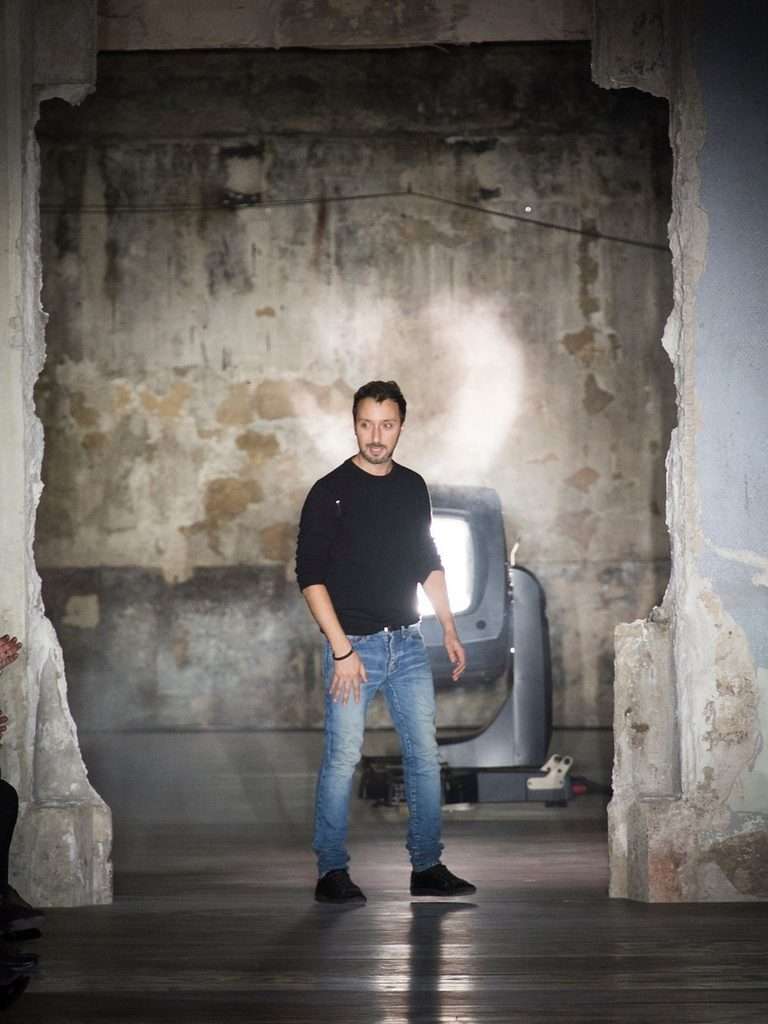
For too long, designers from the region have been reshaping the red carpet narrative, adorning royalty and A-listers alike, yet frequently positioned just outside the core of global fashion discourse. But this season, the story was impossible to overlook: from Georges Hobeika and Zuhair Murad to Elie Saab, the Paris Couture Week calendar was unmistakably defined by Arab creativity – not as mere participants, but as trailblazers.
While some might be tempted to see this moment as “finally proving” something, the reality is there has never been any doubt about the region’s creative prowess. The intricate craftsmanship, the mastery of couture techniques, and the deeply woven cultural narratives have long existed. What we witnessed at Couture Week was a reclamation of space, a confident assertion that the region is not only integral to haute couture’s present but pivotal to its future.
Georges Hobeika

Georges Hobeika’s show marked a significant milestone of 30 years since opening his Beirut atelier. Yet, the collection titled The New Order was not simply a celebration. It was a powerful act of graceful defiance. From sculptural necklines softened by sheer silks to regal capes paired with ethereal tulle, every silhouette radiated strength balanced with delicacy.
Embroidery shimmered like memories, anchoring beauty in a world that often feels unsettled. The message was clear: couture is not an escape, but a confrontation – a search for meaning and strength in times of uncertainty. Under the guidance of Georges and his son Jad, the Maison embodies a bridge between generations and cultures, where old-world craftsmanship meets grounded modernity. In today’s couture landscape, that quiet mastery felt revolutionary.
Rami Al Ali
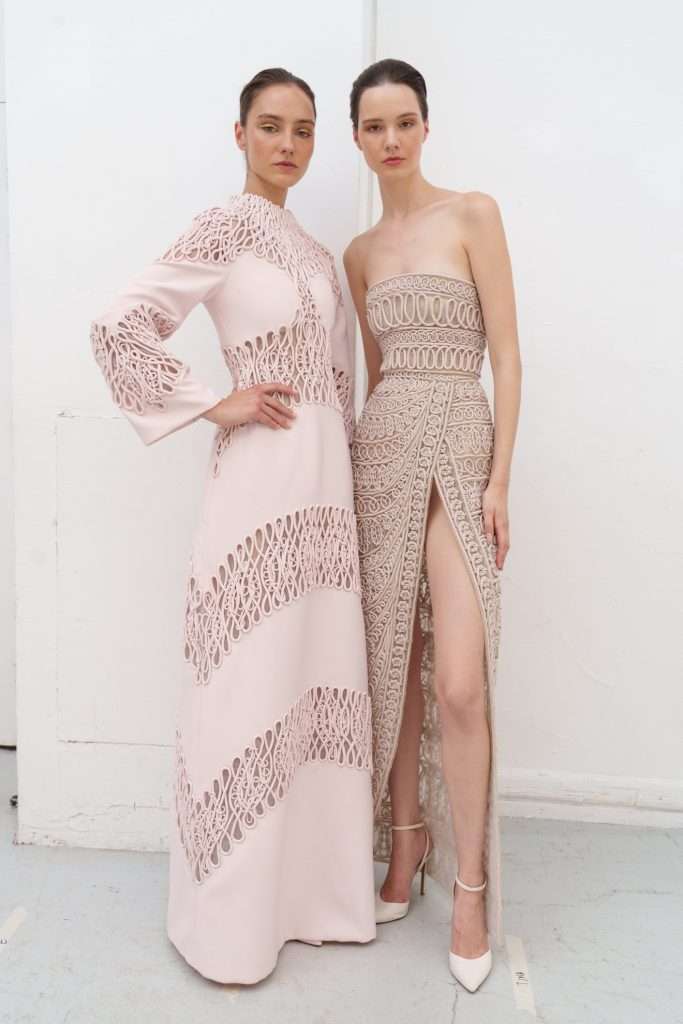
Making his official debut on the Fédération de la Haute Couture et de la Mode calendar, Rami Al Ali unveiled Guardians of Light – The Living Craft of Damascus, a deeply personal ode to the fading grandeur of his native Syria.
The collection immersed viewers in the textures and stories of Old Damascus; the intricate woodwork of Al-Azm Palace, the tiled geometry of Khan As’ad Pasha, and the whispered elegance of ancient courtyards. Through a meticulous collaboration with the Syrian Crafts Council, ancestral motifs were revived and reinterpreted, infusing couture with cultural memory. Each gown became a talisman, with brocades gleaming under hand embroidery and sequins shimmering like traditional Iznik tiles. The palette evoked Damascus at dusk – plums, faded roses, alabaster, antique golds – all woven into fluid and sculptural forms. This was more than nostalgia; it was a vow to preserve heritage as a living, breathing art form.
Zuhair Murad
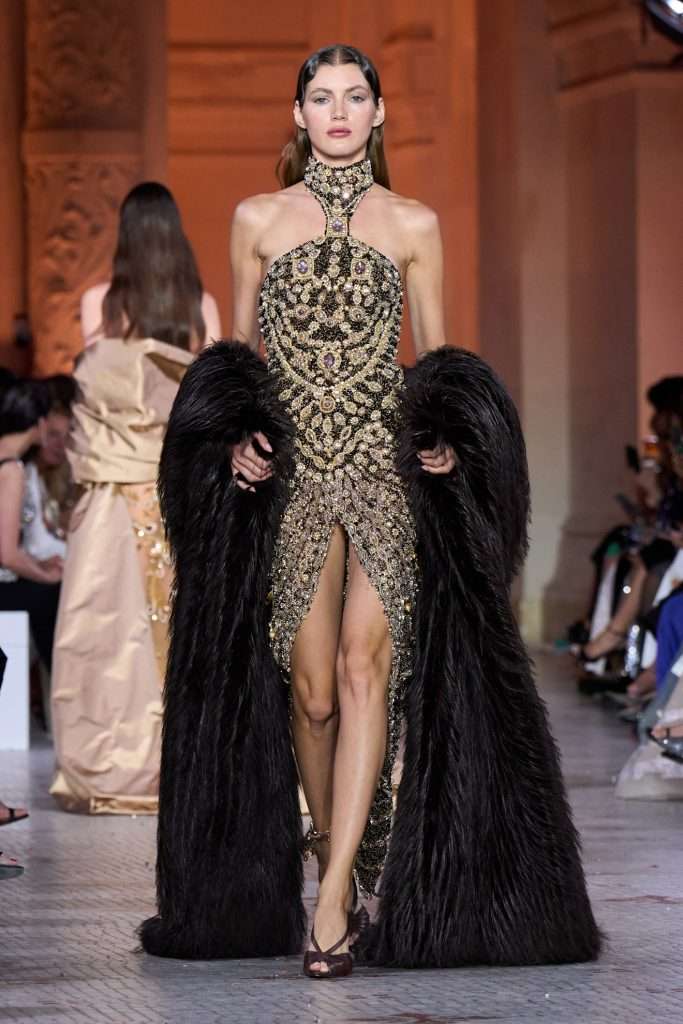
Zuhair Murad revisited the glamour of Hollywood’s Golden Age, drawing inspiration from screen legends like Katharine Hepburn and the archetypal women embodied throughout the era. The collection was anchored by bold, broad shoulders that spoke of resilience and power – a silhouette with roots in the 1940s but reinterpreted for today’s woman. Murad’s gilded palette brought a literal radiance to the runway, while fluid capes and delicate sheer gowns maintained a balance between strength and grace.
Due to the ongoing regional challenges, including fabric supply disruptions, Murad’s resilience shone through. For the first time, he introduced opulent faux fur stoles and coats, blending glamour with ethical sensibility and offering a contemporary touch that complements his signature red-carpet allure.
Elie Saab
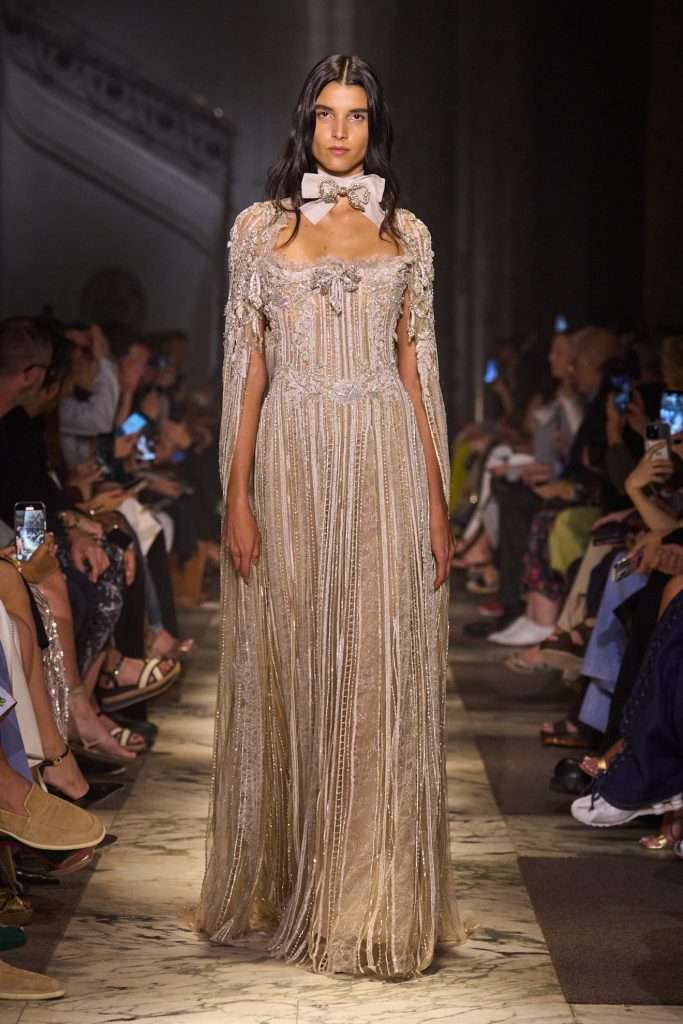
Elie Saab’s The New Court was a vibrant, almost whimsical reimagining of the 18th-century French court, channeling the spirit of Marie Antoinette, with a twist.
A candy-coloured palette of pistachio, pink, mint, and meringue infused the collection with youthful exuberance and theatrical volume. Far from a nostalgic revival, Saab’s vision celebrated the joy of extravagant silhouettes, moving away from the recent minimalist trend to embrace maximalism with renewed energy.
Delicate French laces, whisper-thin jacquards, and antique textile techniques were transformed into light, layered textures that danced with movement. The result was a colourful testament to the enduring appeal of drama and flair.
A Regional Renaissance
This season’s dominance of MENA designers on the Paris Haute Couture calendar is not merely a momentary triumph; it signals a shift in the global fashion landscape. These designers are no longer operating on the periphery but are shaping the very language of couture, infusing it with their heritage, artistry, and vision.
As the couture calendar is increasingly written by voices from the Middle East and North Africa, the world is reminded that luxury fashion’s future is as much about preserving tradition as it is about reimagining it – with confidence, creativity, and an unapologetic sense of identity.