On the spring 2026 runways, the slimmest heel in the room did the loudest talking. The kitten heel, a low, tapered heel of roughly 1.5 to 2 inches, has quietly climbed from understudy to lead: as slim as a stiletto, at a fraction of the height. Loewe and The Row have redrawn it with sharper toes and cleaner lines, and its return is as practical as it is stylish, offering composure without the physical toll of a tall heel. What follows is where the shape came from, why it is back, and how to wear it now so it reads modern rather than nostalgic.
What Is a Kitten Heel? Height and Shape, Defined
A kitten heel is a short, slim heel of about 1.5 to 2 inches (3.5 to 5 cm), with a tapered column that curves slightly inward toward a fine tip.

Height alone does not make a kitten heel. The defining feature is the combination of a low rise and that slender, inward taper. A block heel at the same height looks heavier on the foot, and a stiletto of the same slimness sits far higher and far less securely. Most industry standards cap the kitten heel at around 2 inches; above that, the shoe reads as a standard or mid heel.
The toe varies. The pointed toe is the version dominating fashion feeds in 2026, prized for the long, clean line it draws, but round and square toes both exist and tend to suit wider feet.
Why Are They Called Kitten Heels?
Roger Vivier, the French designer working with Christian Dior in the 1950s, is widely credited with the early kitten-heeled shoes. They were cut low, around 3 to 4 cm, so that teenagers could approximate the polish of grown-up dressing without stepping into the height and the connotations of the stiletto. The metaphor was tidy: a kitten as a smaller, gentler version of the cat.
The shape soon outgrew its training-wheel origins. Audrey Hepburn helped fix it in the popular imagination through the late 1950s and 1960s, and the Mod and Beatnik scenes, built around movement, took to the low heel over the restrictive stiletto. It has returned in cycles ever since, resurfacing whenever fashion swings back toward comfort and wearable elegance.
Are Kitten Heels Still in Style in 2026?

The kitten heel is one of the defining shoe stories of 2026, backed across the runways and worn widely off them. The support runs deep. Loewe, the Spanish house now led by Jack McCollough and Lazaro Hernandez (the founders of Proenza Schouler), built kitten-heel designs into its fall 2026 collection. JW Anderson sent out pointed-toe kitten mules with exaggerated proportions, and The Row kept the idea stripped back and minimal. Prada cut pointed kitten heels with slim straps and a bow, while Victoria Beckham’s autumn/winter 2026 show fielded pointed-toe kitten heels in nearly every variety.
The momentum is not confined to closed shoes. Gucci, the Florentine house, and the Australian designer Christopher Esber both pushed the kitten-heel thong sandal, the dressed-up cousin of the flip-flop, and the street-style set followed. Contemporary labels such as Toteme and By Far have made the low heel a quiet staple, which is part of why this reads less like a passing runway novelty and more like a wardrobe correction toward comfort-conscious polish.
There is a counter-current worth noting. A few fashion editors have started to call the trend mature, suggesting the earliest adopters are already rotating toward something newer. Even so, the kitten heel has the look of a shape settling in for the long term rather than peaking and vanishing, because the reasons behind its return are practical, not seasonal.
The Kitten Heel Styles Worth Knowing
The kitten heel appears across several silhouettes, and the silhouette matters more than the colour when you build outfits around it.
Each version carries a slightly different register, from boardroom-ready to barely-there. The five below cover almost everything on the market.
- Court pump. Closed and usually pointed, the most formal and most versatile of the group. The natural starting point if you own only one pair.
- Slingback. An open heel held by a thin strap across the back. It reads a touch more relaxed than the court, and keeps the foot cool. Manolo Blahnik’s long-running Carolyne is the reference point.
- Mule. Backless, with the foot simply slipped in. The easiest version to wear from day to evening, and the one stylists reach for with cropped, flared trousers.
- Thong sandal. A barely-there Y-strap on a kitten heel, the leading sandal shape of 2026 and the answer to the “kitten heel sandals” search. Dressy without being precious.
- Ankle boot. A kitten heel on a slim ankle boot carries the proportion into autumn and winter, working with both wide denim and a midi hem.
If you are building from scratch, the pointed court pump earns its place first for sheer range, with a slingback or mule second for the warmer months.
How to Style Kitten Heels: Outfit Ideas
The kitten heel works because it reads as polished without effort, which makes it sit comfortably with both tailoring and denim. The styling logic is consistent across looks: let the heel sharpen the line of an outfit rather than dominate it. Below are the combinations that come up most often, organised by what you are already wearing.
How to Wear Kitten Heels with Jeans
Dark indigo denim keeps the pairing sleek and measured, which is why stylists lean on it for the polished, rich-looking jeans-and-heels formula. The inward curve of a barrel-leg jean against a slim heel makes for flattering proportions, and a kitten-heel mule slips neatly under a cropped kick-flare. A pointed court shoe sharpens a slim or straight jean without the commitment of a tall heel.
With Tailoring and Trousers
Wide-leg and cropped trousers are natural partners. A kitten heel peeking from beneath a wide hem reads quietly expensive, and against tailoring, it does the work a stiletto used to do, drawing a clean vertical line, without the strain. For a suit, a pointed court pump in the same tonal family keeps the look uninterrupted.
With Dresses and Skirts
A flowing midi skirt with a slingback is one of the season’s easiest formulas, feminine and effortless at once. For the evening, a black satin kitten heel is a knowing alternative to a stiletto under a little black dress, more unexpected and, somehow, more elegant. Knee-length and midi hems let the shoe register without overwhelming the leg.
With Shorts and for Occasion Dressing
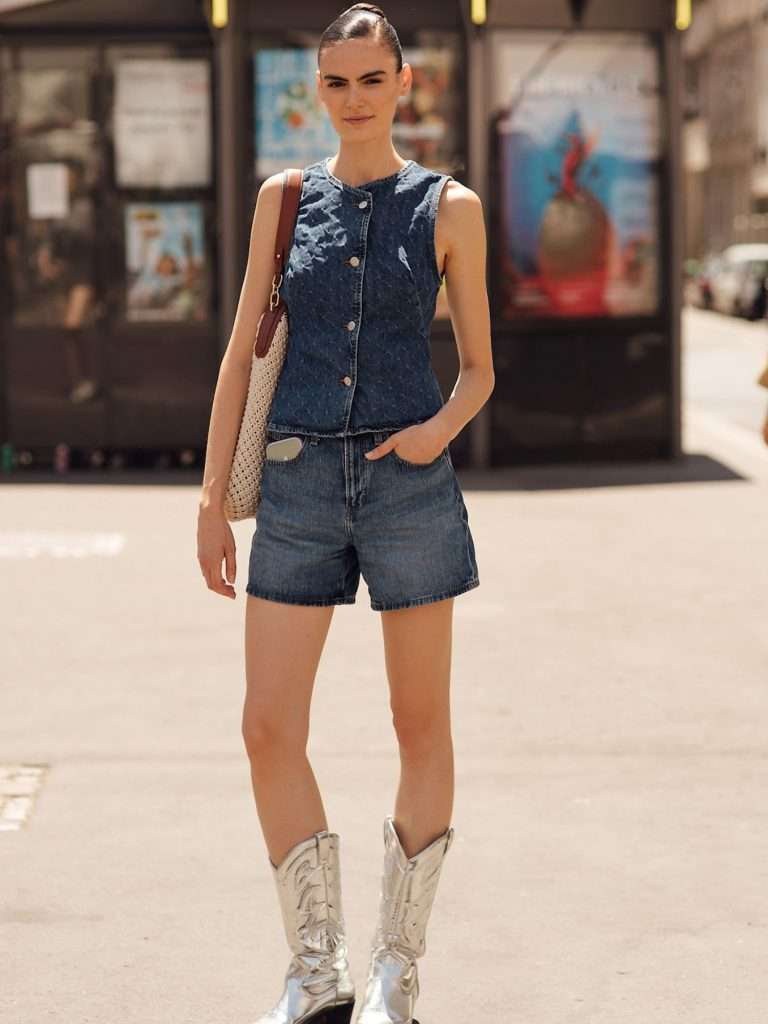
Tailored shorts with a strappy kitten heel carry a distinctly European-summer ease, and a matching linen or satin set in a complementary neutral looks considered rather than fussy. For occasion dressing, satin, metallic or embellished finishes lift the shoe into evening territory while keeping you steady on your feet through a long event.
Are Kitten Heels Comfortable?
The lower rise eases strain on the forefoot, the calves and the lower back compared with a tall heel, and the broader, lower base offers more stability. That makes the kitten heel a sensible option for wider feet and for anyone prone to forefoot pain. A poorly built pair will still hurt, though, so the footbed, the cushioning and the steadiness of the sole matter more than the millimetres of height.
How to Wear Heels with Plantar Fasciitis
Plantar fasciitis is inflammation of the band of tissue running along the sole of the foot, and footwear is a meaningful part of managing it. Podiatrists generally advise against both very tall heels and dead-flat shoes, and point instead to support and cushioning. If you want to wear a heel, the practical guidance is consistent.
- Keep the heel low and the base broad and stable, which is where the kitten heel has an advantage over a stiletto.
- Look for genuine arch support, a cushioned footbed and a deep, supportive heel cup, or add a slim orthotic insole.
- Favour a wider, rounder toe box over a sharp point if your feet ache, to avoid crowding the toes.
- Limit time spent standing or walking on hard floors, and keep a supportive flat to change into.
The evidence on heel height and plantar fasciitis is mixed; a small heel suits some people better than a completely flat shoe, while for others any elevation aggravates it. This is general information rather than medical advice, and anyone living with the condition should seek an individual assessment from a podiatrist.
How to Choose a Kitten Heel
The right kitten heel comes down to four things: heel height, toe shape, the closure and how the shoe is built.
Treat the table below as a quick decision aid. It separates the features that define the style from the ones that decide whether you will actually keep the shoe on past lunch.
| Consider | What to look for | Why it matters |
| Heel height | 1.5 to 2 inches (3.5 to 5 cm) | Holds the proportion and stability that define the style |
| Toe shape | Pointed for length; round or square for ease | A point reads sharp and modern; softer shapes suit wider feet |
| Closure | Court pump, slingback, mule or sandal | Slingbacks and mules read relaxed; the court is the most formal |
| Footbed and base | Light cushioning, a steady sole, a deep heel cup | Comfort comes from construction, not height alone |
| Material | Leather, suede, satin or fine mesh | Suede and satin lean evening; smooth leather works day to night |
Read across, and the priorities sort themselves: hold the height and the taper to keep it a true kitten heel, choose the toe and closure for the mood you want, then let construction settle the question of comfort. A beautiful pair you cannot walk in is a display piece, not a wardrobe staple.
The Quiet Power of a Low Heel
The kitten heel has always rewarded the woman who has nothing to prove. It is the heel of Audrey Hepburn and of the Parisian who walks everywhere, and its 2026 return says less about nostalgia than about a wider shift toward dressing that looks considered and feels liveable at the same time.
Slim, low and a little understated, it draws its line and then gets out of the way, which is exactly the point. In a season of loud shoes, the quietest one in the room is the one doing the most work.
FAQs
Is a 3-inch heel a kitten heel?
No. A kitten heel is capped at roughly 2 inches (about 5 cm). A 3-inch heel (around 7.5 cm) sits in mid-heel territory. What defines a kitten heel is the pairing of a low rise with a slim, tapered shape, not simply being shorter than a stiletto.
Are kitten heels good for plantar fasciitis?
They are gentler than stilettos because the lower height reduces forefoot pressure, but comfort depends on construction. Look for arch support, a cushioned footbed and a steady base. Evidence on heel height and plantar fasciitis is mixed, so anyone with the condition should seek individual advice from a podiatrist.
How do you wear kitten heels with jeans?
Straight-leg, barrel or cropped jeans suit kitten heels best, with the hem grazing the top of the shoe so the heel peeks through. Dark indigo denim keeps the look sleek, and a pointed court shoe or a mule sharpens the line without the height of a stiletto.