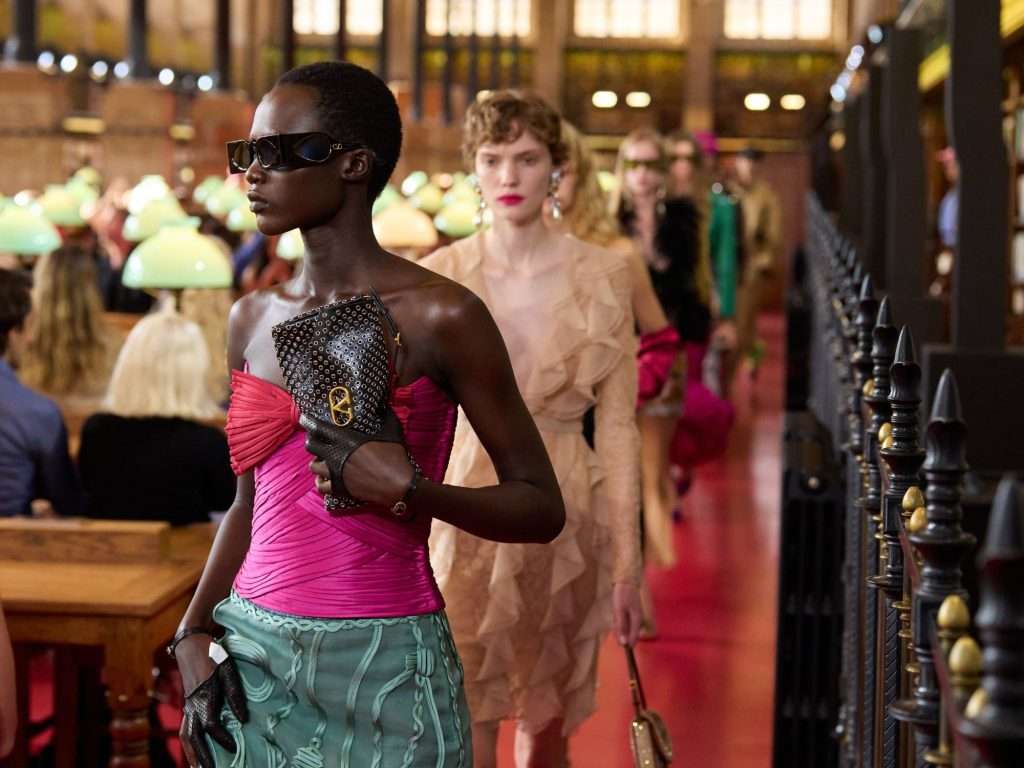
London has never needed a uniform, and Spring/Summer 2027 was a welcome reminder of why. Across five days at London Fashion Week, designers doubled down on the details that make their work distinctive, clashing clothes made for real lives with those created purely for the pleasure of dressing up. There were significant returns too, not least Christopher Kane’s first collection for Mulberry, which brought a missed designer back to the schedule with a British House entering a new chapter. Elsewhere, familiar names found new ways to do what they do so well, leaving London with plenty to look at and, best of all, plenty worth remembering.
Erdem


Erdem Moralıoğlu has never been short of a good muse, but Barbette gave him plenty more to play with. The Texas-born aerialist became a sensation in 1920s Paris, performing high above the crowd in an elaborate feminine stage persona before switching back into traditionally masculine dress away from it. At the Roundhouse, that constant change of character offered Erdem inspiration for Spring/Summer 2027, with tuxedos and tweeds sitting behind the softness and sparkle the designer already does so well.
Denim took Erdem into easier daytime territory, while two oversized Barbour jackets inset with silk brocade brought the ordinary into contact with the ornament for which he is known. It was an unexpected combination, but a useful clue as to where he is heading, with the detail of his eveningwear now finding its way onto pieces designed to infuse beauty beyond the ballroom and into our everyday essentials.
Toga


Toga’s Spring/Summer 2027 collection began with the sort of problem anyone who spent the summer in Europe will understand: what on earth do you wear? Yasuko Furuta found herself in Paris during a heatwave without air-conditioning and became fascinated by the contrast between the city’s skin-baring response and Tokyo’s instinct for staying comparatively covered in intense humidity. Somewhere between the two, she found the answer. On Somerset House’s riverside terrace, a breeze brought the lighter layers to life. Sheer fabrics softened more structured pieces, topped with brooches to pick off and play with.
Edeline Lee


Edeline Lee decided not to hide the hard work this season. Inside Haverstock School’s sports hall, the Canadian-British designer rebuilt the backstage in full view, leaving the seamstresses and stylists usually hidden behind the scenes visible to everyone. Inspired by Sisyphus, the figure from Greek mythology condemned to push the same boulder uphill only to watch it roll back down, it was a cycle Lee recognised in fashion’s own rhythm of months spent building a collection for a runway that’s over in minutes.
Ballet inspired the collection in equal measure, with dancers spending countless hours rehearsing in order to make their moves look effortless on stage. Lee pulled apart tutu structures and extended the clean line of a leotard into longer dresses, keeping the sculptural shapes her clients know and love her for. With the finishing touches on view, the construction of the clothes was unusually visible. And while fashion loves the finished picture; Lee made a persuasive case for the hard work it takes to reach it.
Simone Rocha


Simone Rocha usually gives you enough references to disappear down a rabbit hole, so there was something refreshing about her decision to begin with just one. Back at the Old Bailey, the Irish designer turned to Caravaggio’s The Taking of Christ, which spent more than 50 years hanging under the wrong attribution in a dining room in Dublin before being rediscovered in 1990. It suited a collection that returned to the familiar with fresh eyes, from roses worked into outerwear to skirts threaded with metallic fibre that allowed their shape to shift by hand. With menswear now shown separately, Spring/Summer 2027 felt more focused too, giving the details she already does so well more room to register.
Harris Reed


For Harris Reed, an almost entirely white collection and the disappearance of his familiar 18-centimetre platforms warranted attention. The London-based designer has built his label around towering proportions and no shortage of theatre, yet Spring/Summer 2027 arrived with much of the colour gone and the models several inches closer to the ground. Back at his own House full-time following his departure from Nina Ricci, Reed looked over the previous 11 seasons and returned to shapes that have followed him from the beginning, this time almost entirely in white, at the Mandarin Oriental.
Richard Quinn


Richard Quinn has never pretended his woman is popping out for coffee. Instead, Spring/Summer 2027 stayed happily inside the grand occasions that have built him an international clientele. His audience increasingly reflects that success too, with clients arriving in his clothes to watch the next collection beneath chandeliers. Years spent dressing women for real events have also changed the way Quinn approaches all that grandeur. The silhouettes have become easier to move in, while still offering the sense of occasion his clients come to him for in the first place. Helena Christensen closed the show, but the women already seated around the room said just as much about how far the business has come. The takeaway? Quinn knows exactly who he is dressing, where she is going and why she keeps coming back.
Bora Aksu


Bora Aksu opened Spring/Summer 2027 in white and slowly let the colour deepen as the show went on. Inside St Cyprian’s church, the collection moved from lighter lace layers towards the richer reds inspired by Mary Beale, the 17th-century portraitist widely regarded as Britain’s first professional female painter. Her work drew Aksu towards the more masculine dress of the period, while a centuries-old lace technique from Gaziantep brought a taste of Turkey. By the final looks, oxblood had overtaken much of the white that opened the show, giving the collection a gradual yet no less captivating change in mood.
Roksanda


Roksanda Ilinčić took to the roof of the National Theatre for Spring/Summer 2027. Ilinčić, who studied fine art in Belgrade, had returned to painting over the summer, and after years spent looking to other female artists for inspiration, finally integrated some of her own work into the collection. Faces she had painted appeared across silk scarves draped into dresses, giving the collection a more personal starting point than usual, and a lingering sense of excitement over what we can expect next.
Mulberry


Christopher Kane returning to London Fashion Week would have been news on its own; doing it at Mulberry made the comeback all the more alluring. Three years after closing his namesake label, the Scottish designer arrived at the British House and found something to play with in the Bayswater, with its distinctive design appearing across the collection. Elsewhere, an old Mulberry polo reminded Kane and his sister Tammy of seeing the brand on Scottish football terraces while they were growing up, while the House’s long relationship with leather naturally suited his eye. Kane was easy enough to spot in the collection, but so was Mulberry, which made the partnership feel surprisingly natural for a first outing. One of London’s most missed designers is back, and this time, with an archive at hand to experiment with.
Ahluwalia


Priya Ahluwalia looked to FESTAC ’77 for Spring/Summer 2027, the landmark Pan-African festival that brought artists and thinkers from across the Black diaspora to Lagos for a month-long celebration of culture. Aerial views of the festival site became graphic prints across the collection, giving the London designer a direct route into Nigerian history while continuing the conversation between her Indian-Nigerian heritage and the city in which she grew up. That celebratory spirit carried through the clothes, with looser shapes allowing the prints more room to move, while her ongoing Puma collaboration brought sport into the picture. Ahluwalia has always had a knack for carrying research into a wardrobe without making it feel weighed down by it, and FESTAC gave her particularly rich material to work with.