Cultural festivals are communal celebrations rooted in tradition, belief, and shared identity, practiced across every continent and culture on earth. From India’s Diwali and Brazil’s Rio Carnival to Thailand’s Songkran and Scotland’s Glastonbury, these 20 festivals represent the full spectrum of how humanity marks time, honors ancestors, and expresses joy. This guide covers traditional heritage festivals, religious pilgrimages, arts events, seasonal celebrations, and modern global gatherings organized by category to help you understand what makes each one distinct. Whether you are planning to attend or simply want to understand the world’s most significant cultural celebrations, here is where to start.
Traditional Cultural Festivals
Traditional festivals offer a window into the roots of cultures around the world. Through rituals, music, and communal celebrations, they preserve heritage and bring people together. Many of these events are highlights of any global cultural festivals list, showcasing the unique identity of each region.
Let’s explore some of the most iconic and time-honored festivals from across the globe.
1. Rio Carnival (Rio de Janeiro, Brazil)
Rio Carnival is the world’s largest pre-Lenten festival, held annually over four to five days before Ash Wednesday. Originating in the early 18th century and officially organized since the 1930s, it fills Rio de Janeiro with vibrant parades, street blocos, and samba rhythms. Over 2 million people participate daily, creating a city-wide celebration of life and culture.
Significance:
- Deeply rooted in Brazil’s multicultural heritage, blending European, African, and Indigenous traditions.
- A central expression of Brazilian identity, fostering national pride and community unity.
- Competitive spirit plays a major role: samba schools pour millions into their presentations, judged on music, costumes, harmony, and theme; the final “count” ceremony garners national attention.
Key Activities:
- Samba Parade at the Sambadrome: Featuring up to 3,000 performers per school, enormous floats, and a stadium that welcomes tens of thousands of spectators. Themed performances are judged across multiple categories. One week later, the six top-ranked schools return for the Champions Parade, a more intimate second chance to witness the spectacle.
- Street blocos: Over 400 neighborhood block parties where locals and tourists dance freely to live samba rhythms, fostering an inclusive atmosphere.
- Extravagant costumes & floats: Participants wear elaborate, feathered, sequined outfits, sometimes weighing over 100 pounds, while floats convey cultural stories and political commentary.
- Carnaval Balls: Elaborate masquerade parties held in hotels and clubs across the city, offering a more formal and intimate dimension of the celebration alongside the street festivities.
2. Diwali Festival (India)
Diwali, or the Festival of Lights, is India’s most important and widely celebrated festival, observed over five days each year around October or November. Originating from Sanskrit Deepavali (“row of lights”), it commemorates various legends, such as Lord Rama’s return to Ayodhya, Krishna’s victory over Naraka, and the enlightenment of Mahavira in Jainism. Participants illuminate homes, temples, and streets with diyas (clay oil lamps), rangoli art, and vibrant lanterns. For those travelling to witness it in person, Varanasi, Jaipur, and Delhi offer some of the most immersive Diwali experiences in the country.
Significance:
- Represents the victory of light over darkness, knowledge over ignorance, and good over evil, recurring themes across Hindu, Sikh, Jain, and Buddhist traditions.
- Marks a time for renewal, homes are cleaned and renovated, new clothes are worn, and financial prosperity is sought, especially through worship of Goddess Lakshmi.
- Acts as a moment of spiritual reflection and unity, strengthening family and community bonds across India and within its global diaspora of over 30 million people worldwide.
Key Activities:
- Light displays: Homes are decorated with diyas, candles, and colorful lanterns; public spaces glow with lights.
- Pujas (prayers): Families perform rituals like Lakshmi Puja, Lakshmi-Ganesha worship, and offerings including sweets, incense, and flowers.
- Fireworks and sweets: Firecrackers illuminate the sky, and traditional sweets such as ladoos, barfis, jalebis, and savory snacks are shared with loved ones.
Rituals across the five days:
Each day of Diwali carries its own meaning, traditions, and spiritual significance, creating a celebration that gradually builds toward the main festival night.
- Dhanteras (day 1): focus on cleaning and buying auspicious items.
- Naraka Chaturdashi (day 2): early morning oil baths and prayers.
- Lakshmi Puja (day 3): the main celebration night.
- Govardhan Puja/Bali Pratipada (day 4): honoring Krishna or Bali.
- Bhai Dooj (day 5): celebrating the brother-sister relationship.
3. Chinese New Year (Global)
Chinese New Year, also known as the Spring Festival, is the most important traditional holiday in China, celebrated globally by Chinese communities. The festival marks the beginning of the lunar new year, typically falling between January 21 and February 20. It is a time for families to reunite, honor ancestors, and celebrate new beginnings. The festival is rich with symbolic customs, colorful decorations, and grand celebrations that last up to 15 days.
Significance:
- Represents a fresh start and the hope for good fortune, happiness, and prosperity in the coming year.
- Each year is associated with one of the 12 animals in the Chinese zodiac, each bringing its own set of attributes and predictions for the year.
- A time for family bonding and honoring ancestors through rituals and offerings, ensuring the family’s well-being in the year ahead.
Key Activities:
- Reunion dinners: Families gather for a grand feast on New Year’s Eve, with special dishes that symbolize prosperity, happiness, and longevity.
- Fireworks and firecrackers: To drive away evil spirits and welcome in the new year with a bang, cities and neighborhoods are filled with fireworks and firecrackers.
- Lion and dragon dances: These traditional performances are believed to bring good luck and chase away evil spirits.
- Red envelopes (Hongbao): Elders give children and unmarried adults red envelopes filled with money as a symbol of good luck and blessings.
- Decorations and customs: Homes are decorated with red lanterns, couplets, and symbols of wealth, health, and happiness to invite prosperity into the household.
Religious and Spiritual Festivals
Religious and spiritual festivals provide a deep connection to faith, tradition, and the divine, offering participants a time for reflection, prayer, and renewal. These celebrations, rooted in centuries of belief systems, bring communities together to honor sacred moments, whether through fasting, feasts, rituals, or pilgrimages. From major religious holidays to local spiritual observances, these festivals are not only acts of devotion but also a way to preserve culture and strengthen communal bonds.
Next, we’ll explore some of the most significant religious and spiritual festivals celebrated worldwide.
4. Hajj Pilgrimage (Saudi Arabia)
Hajj is one of the five pillars of Islam and a mandatory religious duty for Muslims who are physically and financially able to undertake it. Held annually in Mecca, Saudi Arabia, during the Islamic month of Dhu al-Hijjah, it is one of the largest religious gatherings in the world. Millions of Muslims travel to Mecca to perform a series of sacred rituals, commemorating the actions of Prophet Ibrahim (Abraham) and his family.
Significance:
- Hajj is a deeply spiritual experience, offering Muslims an opportunity for repentance, renewal of faith, and closeness to God.
- It serves as a powerful symbol of unity, as Muslims of all nationalities, races, and backgrounds come together to worship in one place.
- The pilgrimage commemorates key moments from the lives of Prophet Ibrahim, his wife Hajar, and their son Ismail, reinforcing themes of faith, sacrifice, and devotion.
Key Activities:
- Ihram: Pilgrims enter a state of spiritual purity and wear simple white clothing, symbolizing equality and humility before God.
- Tawaf: Pilgrims walk around the Kaaba in a counterclockwise direction seven times, symbolizing the unity of believers in the worship of the One God.
- Sa’i: Pilgrims walk seven times between the hills of Safa and Marwah, commemorating Hajar’s search for water for her son Ismail.
- Standing at Arafat: The pinnacle of Hajj, where pilgrims gather in prayer at the plain of Arafat, seeking God’s forgiveness and mercy.
- Sacrifice and Shaving: Pilgrims perform a symbolic act of sacrifice by slaughtering an animal (usually a sheep or goat) and shaving their heads, signifying purification and submission to God.
5. Oktoberfest (Germany)
Oktoberfest is the world’s largest beer festival, held annually in Munich, Germany, since 1810. It runs for 16–18 days, typically from late September to the first weekend in October. The festival celebrates Bavarian culture, with visitors enjoying traditional German food, music, and, of course, beer. Oktoberfest draws millions of people from around the globe, making it a significant cultural event in Germany and beyond.
Significance:
- Oktoberfest is a symbol of Bavarian tradition and hospitality, celebrating the region’s rich history of brewing and food culture.
- The festival fosters social interaction and community, as people from all walks of life come together to share in the joy of music, food, and drink.
- It is an important cultural export for Germany, attracting international visitors and highlighting German craftsmanship in brewing.
Key Activities:
- Beer tents: Several large beer tents are set up, each serving a specific type of beer from Munich’s six major breweries. These tents also feature live music, dancing, and traditional Bavarian songs.
- Traditional food: Alongside the beer, visitors enjoy Bavarian delicacies such as pretzels, bratwurst, roast chicken, and sauerkraut.
- Parades: The festival kicks off with a grand parade, featuring traditional Bavarian costumes, marching bands, horse-drawn beer wagons, and regional dignitaries.
- Costumes: Many festival-goers wear traditional Bavarian attire, with men sporting lederhosen and women wearing dirndls, adding to the festive atmosphere.
- Amusement rides and games: The event also features carnival rides, games, and family-friendly activities for attendees of all ages.
6. Day of the Dead Festival (Mexico)
The Day of the Dead (Día de los Muertos) is a vibrant and deeply meaningful Mexican festival that honors deceased loved ones. Celebrated on November 1st and 2nd, it combines indigenous traditions with Catholic elements. While it may appear somber, the festival is a joyful and colorful celebration of life, where families gather to remember and celebrate the lives of the departed.
Significance:
- The festival honors the belief that the souls of the deceased return to the world of the living to reunite with their families. It is a time of remembrance, not mourning.
- It blends ancient Mesoamerican traditions, particularly from the Aztec culture, with Catholic practices, creating a unique fusion of rituals.
- The Day of the Dead is a celebration of life and death, emphasizing the cyclical nature of existence and the ongoing connection between the living and the dead.
Key Activities:
- Altars (Ofrendas): Families set up altars in their homes or at cemeteries, decorated with marigolds, candles, incense, and offerings of food, drinks, and personal items for their deceased loved ones.
- Sugar skulls (Calaveras de azúcar): These decorative skulls, made of sugar or chocolate, are often personalized with the names of the deceased and are an iconic symbol of the festival.
- Traditional foods: Special foods like pan de muerto (bread of the dead), tamales, and favorite dishes of the departed are prepared and offered on the altars.
- Cemetery visits: Families visit the graves of their loved ones, decorating them with flowers and lighting candles. It’s a time for storytelling, singing, and sharing memories.
- Face painting and costumes: Many people paint their faces to resemble decorative sugar skulls, embracing the festive spirit while paying homage to the departed.
Arts and Performance Cultural Festivals
Arts and performance festivals are celebrated worldwide as dynamic showcases of creativity, talent, and cultural exchange. These festivals highlight various forms of art, from music and theater to dance and visual arts, drawing audiences from around the globe. As part of the Global Cultural Festivals calendar, these events offer artists and performers a platform to express their unique voices, while providing audiences with unforgettable experiences that celebrate the diversity and richness of world cultures.
Let’s explore some of the most influential and exciting arts and performance festivals across the globe.
7. Edinburgh Fringe Festival (Scotland)
The Edinburgh Fringe Festival, held annually in Scotland’s capital, is the largest arts festival in the world. Established in 1947, it has grown into a vibrant, month-long celebration of performance art, showcasing thousands of shows across various genres, including theater, comedy, dance, music, and spoken word. The festival attracts performers, artists, and audiences from all corners of the globe, creating a dynamic and diverse cultural atmosphere.
Significance:
- The Edinburgh Fringe is renowned for its inclusivity, allowing both emerging artists and established performers to present their work without censorship or restrictions.
- It serves as a launchpad for many famous performances and comedians, with some acts gaining international recognition after debuting at the festival.
- The festival embodies the spirit of artistic freedom, experimentation, and innovation, making it a symbol of creative expression in the global arts scene.
Key Activities:
- Performances: With thousands of shows to choose from, the festival offers everything from experimental theater and cutting-edge comedy to dance, opera, and immersive art.
- Street Performances: In addition to traditional performances in venues, the streets of Edinburgh come alive with spontaneous, outdoor performances, often free to the public.
- Workshops and Discussions: Artists and performers often host workshops, panel discussions, and meet-and-greets, allowing audiences to engage more deeply with the creative process.
- Comedy: The festival is particularly famous for its comedy shows, with many comedians using it as a platform for debuting new material, leading to significant breakthroughs in their careers.
- Global Participation: Artists from around the world come to Edinburgh, enriching the festival with diverse cultural perspectives, making it a melting pot of ideas, styles, and performances.
8. Venice Biennale (Italy)
The Venice Biennale is one of the most prestigious cultural events in the world, showcasing contemporary art, architecture, theater, dance, and film. Established in 1895, this international exhibition takes place every two years in Venice, Italy, and has become a cornerstone of global artistic discourse. It offers a platform for avant-garde artists and innovative creators to display their work, fostering cultural exchange and dialogue among nations.
Significance:
- The Venice Biennale is considered a leading event in the world of contemporary art and serves as a reflection of current global artistic trends, offering insights into the evolution of culture and society.
- The festival’s architectural and artistic exhibits often engage with pressing political, social, and environmental issues, creating a space for reflection and critique.
- Its international pavilions allow each country to present its unique artistic vision, fostering cross-cultural exchange and a broader understanding of diverse creative practices.
Key Activities:
- Art Exhibitions: National pavilions showcase the work of selected artists, with a focus on innovative and cutting-edge contemporary art.
- Film and Theater: The Biennale also features international film screenings and theatrical performances, attracting filmmakers and theater artists from across the globe.
- Architecture Biennale: Held every two years alongside the art exhibition, the Architecture Biennale focuses on the exploration of architectural trends, innovations, and ideas.
- Dance and Music Performances: The Biennale also includes dance and music performances, often blending contemporary and traditional forms to create immersive, interdisciplinary experiences.
- Awards and Recognition: The Biennale presents several prestigious awards, such as the Golden Lion for Best National Pavilion and Best Artist, which are highly regarded in the international art world.
9. Mardi Gras Festival (New Orleans, USA)
Mardi Gras, held annually in New Orleans, Louisiana, is one of the most famous and vibrant festivals in the United States. Rooted in French Catholic tradition, it marks the culmination of the Carnival season before the start of Lent. Known for its colorful parades, extravagant costumes, and festive atmosphere, Mardi Gras has evolved into a celebration of music, dance, and culture, drawing millions of visitors from around the world.
Significance:
- Mardi Gras represents a joyful release before the solemn period of Lent in the Christian calendar. It is a time for indulgence, revelry, and community celebration.
- The festival is deeply tied to the cultural heritage of New Orleans, blending French, African, Spanish, and Creole influences to create a unique and distinctively local event.
- The event serves as a major expression of New Orleans’ identity, showcasing its music, traditions, and sense of community pride.
Key Activities:
- Parades: The heart of Mardi Gras is the parade, featuring massive floats, marching bands, dancers, and extravagant costumes. Krewes, or parade organizations, plan and execute these grand events, often with a specific theme each year.
- Beads and Throws: Revelers on the floats toss beads, coins (dubloons), and other trinkets to the crowds, a tradition that is part of the fun and excitement.
- Costumes and Masks: Participants and spectators dress in elaborate costumes, often in the traditional Mardi Gras colors of purple, green, and gold, symbolizing justice, faith, and power.
- Music and Dance: New Orleans is the birthplace of jazz, and the festival’s music scene reflects this, with street performances, jazz bands, and live music playing throughout the city.
- King Cake: A traditional cake that is decorated with colorful icing and sprinkles, King Cake is an essential part of Mardi Gras celebrations, with a small figurine hidden inside. The person who finds the figurine is expected to host next year’s King Cake party.
Seasonal Festivals and Pagan Holidays
Seasonal and harvest festivals are celebrated across the globe to mark the changing of seasons, the bounty of crops, and the cycles of nature. These festivals are often rooted in ancient agricultural practices and are deeply connected to the rhythms of the earth. As part of the Top festivals in the world, these events celebrate not only the harvest but also the community, gratitude, and connection to the land. They are a time to rejoice in the fruits of labor and offer thanks for nature’s abundance.
Let’s explore some of the most important seasonal and harvest festivals that bring people together to honor the changing seasons and the harvest.
10. Cherry Blossom Festival (Japan)
The Cherry Blossom Festival, or Hanami, is one of Japan’s most iconic and beloved festivals, celebrating the arrival of spring. The festival centers around the blooming of cherry blossoms (sakura), which typically occurs in March or April, depending on the region. It’s a time for families, friends, and communities to gather under the blooming trees, enjoy nature, and reflect on the fleeting beauty of life.
Significance:
- Hanami has been a cherished tradition in Japan for over a thousand years, symbolizing the transient nature of life, as the cherry blossoms bloom for only a short period before falling.
- The festival holds spiritual significance in Japanese culture, representing renewal, hope, and the impermanence of life.
- It is a time for people to come together in peace, celebrate the beauty of nature, and honor the arrival of warmer days.
Key Activities:
- Picnicking under the cherry trees: People gather in parks and gardens, spread out picnic blankets, and enjoy meals and drinks while surrounded by cherry blossoms.
- Viewing parties: Organized Hanami viewing parties take place across Japan, where people admire the blossoms, often accompanied by traditional music, poetry, and storytelling.
- Photography: The cherry blossoms create a stunning visual display, making photography a popular activity during the festival.
- Night Hanami (Yozakura): In some locations, cherry trees are illuminated at night, offering a unique and magical perspective of the blossoms.
- Traditional rituals: Some areas hold traditional ceremonies, such as offerings to deities and prayers for a good harvest, which are intertwined with the Hanami celebrations.
11. Thanksgiving Festival (USA/Canada)
Thanksgiving is a major holiday celebrated in both the United States and Canada, though on different dates. In the U.S., it takes place on the fourth Thursday of November, while in Canada, it is observed on the second Monday of October. The festival is rooted in the traditions of harvest feasts and gives thanks for the bountiful harvest and blessings of the year.
Significance:
- Thanksgiving is a time for families and friends to gather and express gratitude for the blessings of the past year, particularly the harvest.
- The U.S. holiday commemorates the 1621 feast shared between the Pilgrims and the Wampanoag people in Plymouth, Massachusetts, marking the beginning of a tradition of thanksgiving.
- In Canada, it has roots in both European harvest celebrations and the indigenous peoples’ seasonal traditions, and serves as a time to celebrate the harvest and express gratitude.
Key Activities:
- Feasts: A traditional Thanksgiving meal includes turkey, stuffing, mashed potatoes, cranberry sauce, and pumpkin pie, with variations depending on regional or family traditions.
- Parades: In the U.S., the Macy’s Thanksgiving Day Parade in New York City is an iconic event, featuring giant balloons, marching bands, and performances.
- Football: Watching football is a popular Thanksgiving pastime, especially in the U.S., where NFL games are broadcast throughout the day.
- Volunteering and Charity: Many people use the holiday as an opportunity to give back, volunteering at food banks or serving meals to those in need.
- Spending time with family: Thanksgiving is primarily a family-oriented holiday, with gatherings, sharing meals, and participating in activities that bring loved ones together.
12. Mid-Autumn Festival (China/Vietnam)
The Mid-Autumn Festival, also known as the Moon Festival, is a traditional celebration held on the 15th day of the 8th month of the lunar calendar, typically in September or October. It is widely observed in China, Vietnam, and other East and Southeast Asian countries, marking the harvest moon and the end of the summer harvest season. The festival celebrates the abundance of the harvest and the beauty of the full moon.
Significance:
- The festival is a time to reunite with family and celebrate the harvest, symbolizing prosperity, harmony, and togetherness.
- It is steeped in various myths and legends, with one of the most famous being the story of Chang’e, the Moon Goddess, who is said to live on the moon.
- The festival also emphasizes the importance of family bonding and is a time for families to come together, share food, and enjoy each other’s company.
Key Activities:
- Mooncakes: One of the most iconic foods of the festival, mooncakes are round pastries filled with lotus seed paste or red bean paste, often with salted egg yolks in the center, symbolizing the full moon.
- Lantern Processions: Children often carry brightly colored lanterns in the shape of animals or flowers, walking in parades and lighting up the night.
- Moon Viewing: Families gather outdoors to admire the full moon, often enjoying a festive meal together while gazing at the sky.
- Poetry and Songs: In some regions, it is traditional to recite poetry or sing songs celebrating the moon and harvest during the evening celebrations.
- Dancing and Festivals: In certain areas, traditional performances such as lion dances and dragon dances are held, adding to the festive atmosphere.

Unique and Unusual Festivals
Around the world, some festivals stand out due to their quirky, unusual, or even bizarre nature. These events often reflect the creativity, humor, and cultural traditions of their regions, offering one-of-a-kind experiences that captivate both locals and visitors. From quirky competitions to eccentric rituals, these festivals push the boundaries of what’s considered “normal” and celebrate the joy of the unexpected.
Let’s dive into some of the most unique and unusual festivals celebrated globally.
13. La Tomatina Festival (Spain)
La Tomatina is an annual festival held in the town of Buñol, Spain, on the last Wednesday of August. Known as the world’s largest food fight, the event sees participants throwing over 100 tons of tomatoes at each other in the streets. What started as a local tradition in 1945 has evolved into a global spectacle, attracting thousands of people from around the world who come to join in the fun and chaos.
Significance:
- La Tomatina originated as a spontaneous, impromptu event and has grown into a major cultural celebration. Despite its chaotic nature, the festival has come to symbolize the community’s spirit, with everyone, locals and tourists alike, coming together for a shared experience of lighthearted fun.
- The festival also highlights the agricultural abundance of the region, as tomatoes are a key product in Spain, and serves as a way for the community to let loose and celebrate the end of the summer harvest.
Key Activities:
- Tomato Fight: The main event involves a massive tomato fight, where participants throw ripe tomatoes at each other in the streets of Buñol.
- Preparation and Safety: Prior to the start of the fight, trucks filled with tomatoes enter the town, and participants are encouraged to squish the tomatoes before throwing them to minimize injury.
- Parades and Music: Leading up to the tomato fight, there are festive parades, music, and dancing, with people dressed in eccentric costumes.
- Water Fights: After the tomato battle, water fights are common, as participants use hoses and water trucks to wash away the tomato remnants.
- Cleaning Up: The town undergoes a massive cleaning effort, and by the end of the day, the streets are surprisingly clean, with the tomatoes often providing a natural cleaning solution for the cobblestone roads.
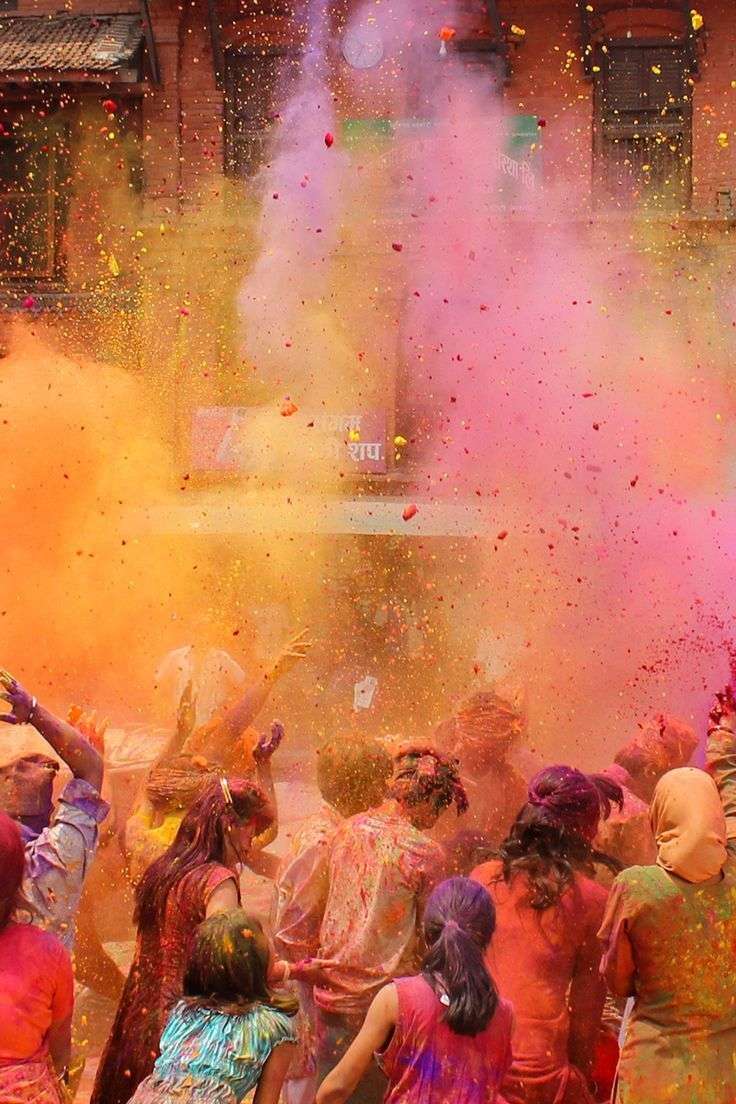
14. Holi Festival (India/Nepal)
Holi, also known as the Festival of Colors, is one of the most vibrant and widely celebrated festivals in India and Nepal, typically held in March to mark the arrival of spring. It is a Hindu festival that celebrates the triumph of good over evil, love, and the renewal of life. The festival is characterized by the joyous throwing of colored powders, singing, dancing, and socializing, creating a lively, colorful atmosphere throughout the region.
Significance:
- Holi marks the victory of good over evil, symbolized by the burning of Holika, a demoness, in a bonfire on the eve of the festival.
- It is a celebration of love and the arrival of spring, a time of renewal, joy, and the forging of new bonds.
- Holi breaks down social barriers, as people of all ages, castes, and backgrounds come together to celebrate, making it a festival of unity and togetherness.
Key Activities:
- Throwing colored powders: The main event of Holi involves throwing vibrant colored powders (gulal) at each other, covering participants in a rainbow of colors.
- Dancing and music: Traditional folk songs and Bollywood hits fill the air as people dance in the streets to celebrate the festival.
- Bonfires: On the eve of Holi, bonfires are lit to symbolize the destruction of evil and the triumph of good, commemorating the mythological story of Holika.
- Sharing sweets and drinks: Special sweets like gujiya and drinks such as thandai (a milk-based drink) are shared among friends and family during the celebrations.
- Festive gatherings: People gather with friends and family, visit temples, and participate in social events, enjoying the company of loved ones.
15. Up Helly Aa (Scotland)
Up Helly Aa is an annual Viking fire festival held in Lerwick, Shetland, Scotland, every January. It celebrates Shetland’s Norse heritage and features a torch-lit procession, a Viking longship burning, and elaborate costumes. The festival is a unique blend of history, drama, and fire, attracting thousands of spectators each year.
Significance:
- Up Helly Aa honors Shetland’s Viking roots, with participants donning Viking costumes and reenacting the burning of a Viking longship, symbolizing the region’s historical connection to the Vikings.
- It is a celebration of community, with months of preparation leading up to the event. The festival has become a significant part of Shetland’s cultural identity, blending traditional and modern elements.
Key Activities:
- Torch-lit procession: Hundreds of participants, known as “guizers,” dress in Viking costumes and march through the streets, carrying torches, in a grand procession.
- Burning the longship: The culmination of the festival is the burning of a Viking longship, symbolizing the end of the Viking era and honoring the island’s past.
- Viking costumes: The guisers wear elaborate Viking costumes, often handmade, and are judged in various categories.
- Feasting and revelry: After the procession, there are community celebrations, including feasts and dances, in various halls across Shetland.
- Music and storytelling: The festival includes traditional Shetland music, and stories of Viking history are shared, preserving the region’s cultural heritage.
16. Songkran Water Festival (Thailand)
Songkran is Thailand’s most celebrated cultural festival, marking the Thai New Year each year from April 13 to 15. Rooted in Buddhist tradition, the festival originally centered on the ritual cleansing of Buddha statues with scented water as an act of purification and blessing. Today, it has evolved into one of the world’s most exuberant street celebrations, transforming cities like Chiang Mai, Bangkok, and Ayutthaya into city-wide water battles that draw visitors from across the globe.
Significance:
- Songkran carries deep spiritual meaning, representing the washing away of misfortunes and sins from the previous year to welcome a fresh, prosperous new beginning.
- The festival reflects core Thai values of respect and family, with younger generations pouring water over the hands of elders as a gesture of gratitude and blessing.
- It stands as one of the most vivid examples of a traditional ritual evolving across generations while retaining its cultural and spiritual core.
Key Activities:
- Water fights: Streets across Thailand erupt into massive water battles, with locals and tourists armed with water guns, buckets, and hoses. What began as a gentle ritual blessing has become a joyful, city-wide celebration.
- Temple rituals: Alongside the street festivities, Thais visit temples to pray, make offerings, and participate in the ceremonial bathing of Buddha images.
- Sand stupas: Worshippers build small sand pagodas in temple grounds, decorated with flags and flowers, as a form of merit-making.
- Elder blessings: Families gather for the rod nam dam hua ceremony, where younger members respectfully pour scented water over the hands of parents and grandparents.
- Traditional parades: In cities like Chiang Mai, elaborate processions feature traditional costumes, folk music, and the crowning of a Songkran beauty queen.
Modern and Global Cultural Events
In today’s interconnected world, festivals have evolved into global celebrations, transcending borders and cultures. Modern and globalised festivals bring together diverse communities, blending traditional customs with contemporary influences. As part of cultural celebrations worldwide, these events reflect the dynamic nature of globalisation, where local traditions are shared and celebrated on an international stage, offering a unique opportunity for cultural exchange and understanding.
Let’s explore some of the most prominent modern and globalized festivals that showcase the spirit of unity and diversity across the world.
17. Coachella (USA)
Coachella Valley Music and Arts Festival, commonly known as Coachella, is an annual music festival held in Indio, California, attracting music lovers and festival-goers from all over the world. Launched in 1999, it has since become one of the most famous and influential music festivals globally, featuring performances from top artists in rock, hip hop, pop, and electronic music, along with large-scale art installations and immersive experiences.
Significance:
- Coachella has grown into a global cultural phenomenon, known for its star-studded lineups and its role in shaping music trends and fashion.
- It is a major platform for emerging artists to gain visibility, while also hosting legendary performances from established names.
- The festival is as much about the experience as the music, offering an environment that celebrates creativity, individuality, and self-expression.
Key Activities:
- Live Performances: Coachella features multiple stages with performances from a wide variety of genres, offering something for every type of music fan.
- Art Installations: The festival includes large-scale, interactive art installations, turning the venue into a living canvas.
- Fashion: Coachella is renowned for its fashion-forward attendees, who often showcase bohemian and eclectic styles, influencing global fashion trends.
- Food and Drinks: A variety of gourmet food trucks, craft cocktails, and artisanal beverages cater to the diverse tastes of attendees.
- Celebrity Sightings: Celebrities and influencers flock to Coachella, making it a hotspot for fashion and entertainment enthusiasts.
18. Tomorrowland (Belgium)
Tomorrowland is one of the world’s largest and most influential electronic dance music (EDM) festivals, held annually in Boom, Belgium. First launched in 2005, it has become a global EDM powerhouse, attracting hundreds of thousands of fans from around the world for an immersive experience of music, art, and technology.
Significance:
- Tomorrowland is renowned for its extravagant production, with enormous stages, stunning visual effects, and elaborate themed performances.
- The festival brings together the biggest names in EDM, as well as rising stars, creating a celebration of both electronic music and global unity.
- The event has helped solidify Belgium’s position as a hub for electronic music and has inspired similar festivals worldwide.
Key Activities:
- Live DJ Sets: World-renowned DJs perform at multiple stages, offering a non-stop experience of high-energy music that spans house, techno, trance, and other EDM genres.
- Themed Stages and Decor: Tomorrowland is famous for its innovative stage designs and immersive, theatrical setups, transporting festival-goers into fantastical worlds.
- Multinational Atmosphere: With attendees from over 200 countries, Tomorrowland is a melting pot of cultures, making it one of the most diverse music festivals in the world.
- Live Streams: The festival’s performances are broadcast globally, allowing fans who can’t attend to experience the magic of Tomorrowland from home.
- After-Parties and Experiences: In addition to the main event, Tomorrowland offers exclusive after-parties, VIP experiences, and various side events that heighten the overall festival atmosphere.
19. Dubai Shopping Festival (UAE)
The Dubai Shopping Festival (DSF) is an annual event held in Dubai, United Arab Emirates, that transforms the city into a shopper’s paradise. Launched in 1996, DSF has become a major global retail event, attracting millions of tourists each year to take advantage of significant discounts, exclusive sales, and extravagant shopping experiences.
Significance:
- The Dubai Shopping Festival has become a major tourist attraction, boosting the UAE’s economy while showcasing Dubai as a global hub for shopping, fashion, and luxury goods.
- The event is a blend of retail, entertainment, and cultural activities, offering something for everyone, from high-end fashion lovers to bargain hunters.
- The festival reflects Dubai’s status as a modern, cosmopolitan city that embraces global commerce while offering a world-class shopping experience.
Key Activities:
- Shopping Deals and Discounts: The primary draw of the festival is the incredible discounts and offers across Dubai’s malls, boutiques, and retail outlets.
- Raffles and Giveaways: DSF is known for its extravagant raffles and prize draws, where attendees can win luxury cars, cash prizes, and designer goods.
- Entertainment and Shows: The festival also includes live performances, fashion shows, and family-friendly activities, making it a well-rounded cultural experience.
- Culinary Experiences: Dubai’s top restaurants and food festivals are part of DSF, offering special culinary experiences and food deals.
- Fireworks and Light Shows: The festival is capped with stunning fireworks displays and light shows that illuminate Dubai’s skyline, making for an unforgettable visual experience.
20. Glastonbury Festival (United Kingdom)
Glastonbury is the world’s largest greenfield music and performing arts festival, held annually on Worthy Farm in Somerset, England. Founded in 1970 by farmer Michael Eavis, the day after Jimi Hendrix performed at the Isle of Wight Festival, it has grown from a 1,500-person gathering into a temporary city of over 200,000 attendees, making it one of the most culturally significant modern festivals on the planet.
Significance:
- Glastonbury has shaped the global festival culture for over five decades, with its Pyramid Stage widely regarded as the most iconic festival stage in the world, having hosted performances from David Bowie to Beyoncé.
- The festival is as much a cultural and political event as a musical one, with dedicated spaces for activism, spoken word, and social commentary woven into its programme.
- It has become a defining platform for emerging and established artists alike, with a Glastonbury headline slot considered one of the highest achievements in live music.
Key Activities:
- Live Performances: Across more than 100 stages, the festival spans rock, pop, electronic, jazz, folk, and world music, offering one of the most diverse lineups of any event in the world.
- The Pyramid Stage: The festival’s iconic centerpiece, where legendary headline performances have set the tone for popular culture for generations.
- Arts and Theatre: Beyond music, Glastonbury features circus acts, theatrical performances, poetry, film screenings, and large-scale art installations across dedicated areas like the Park and Green Fields.
- Activism and Culture: The Green Fields area hosts conversations around sustainability, politics, and social change, reflecting the festival’s longstanding commitment to progressive values.
- Immersive Atmosphere: With its own infrastructure of streets, markets, healing fields, and communities, Glastonbury functions as a temporary city with a distinct identity that extends well beyond the music.
Every Festival Tells a Story Worth Knowing
Cultural festivals are not simply events on a calendar. They are living records of how communities understand the world, transmit values across generations, and find meaning in shared experience. The 20 festivals in this guide span six continents, multiple faiths, and centuries of tradition, yet they share a common thread: each one brings people together around something larger than the individual.
Whether you are drawn to the spiritual depth of Hajj, the visual spectacle of Rio Carnival, or the creative freedom of Edinburgh Fringe, the most valuable thing any festival offers is perspective. Experiencing one firsthand, or simply learning about it with genuine curiosity, is one of the most direct ways to understand a culture on its own terms.
What are the most visually stunning cultural festivals for visitors?
Diwali in Varanasi, Rio Carnival at the Sambadrome, Holi in Rajasthan, and Up Helly Aa in Shetland rank among the most spectacular. Each offers a distinct visual experience, from lantern-lit streets and colored powder clouds to torchlit Viking processions and towering samba floats.
Which countries are best known for preserving traditional festivals?
India, Japan, Mexico, and Thailand are consistently recognised for their living festival traditions. Japan’s Hanami has continued for over a thousand years, and Mexico’s Day of the Dead holds UNESCO cultural heritage status.
What are the top 5 festivals in the world?
The five most recognised cultural festivals globally are Rio Carnival in Brazil, Diwali in India, Oktoberfest in Germany, Holi in India and Nepal, and the Chinese New Year, celebrated across more than 180 countries worldwide.