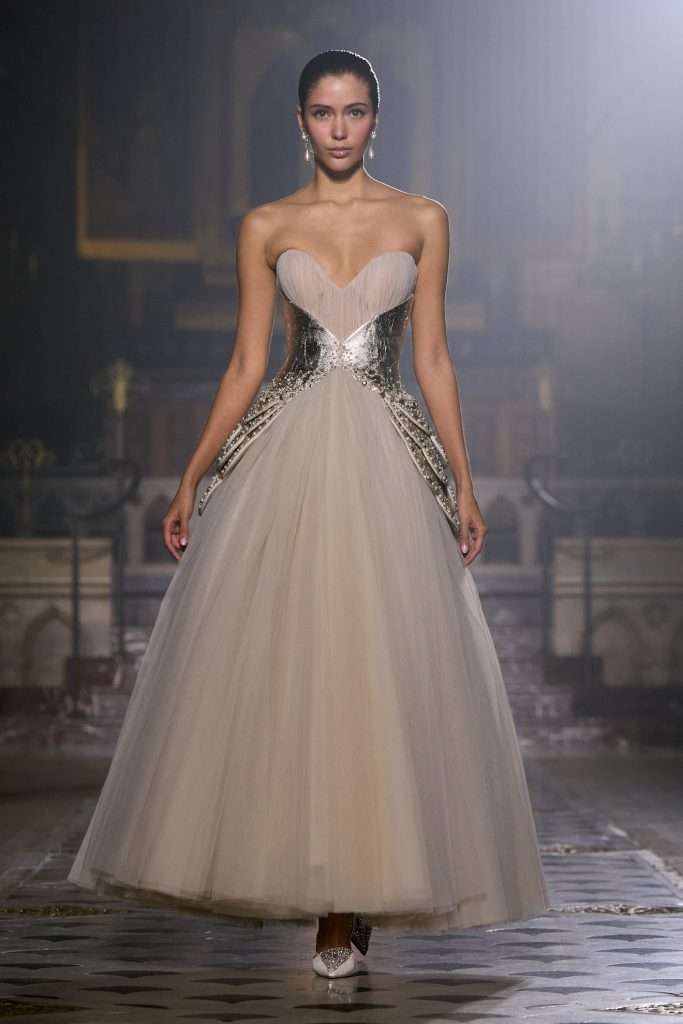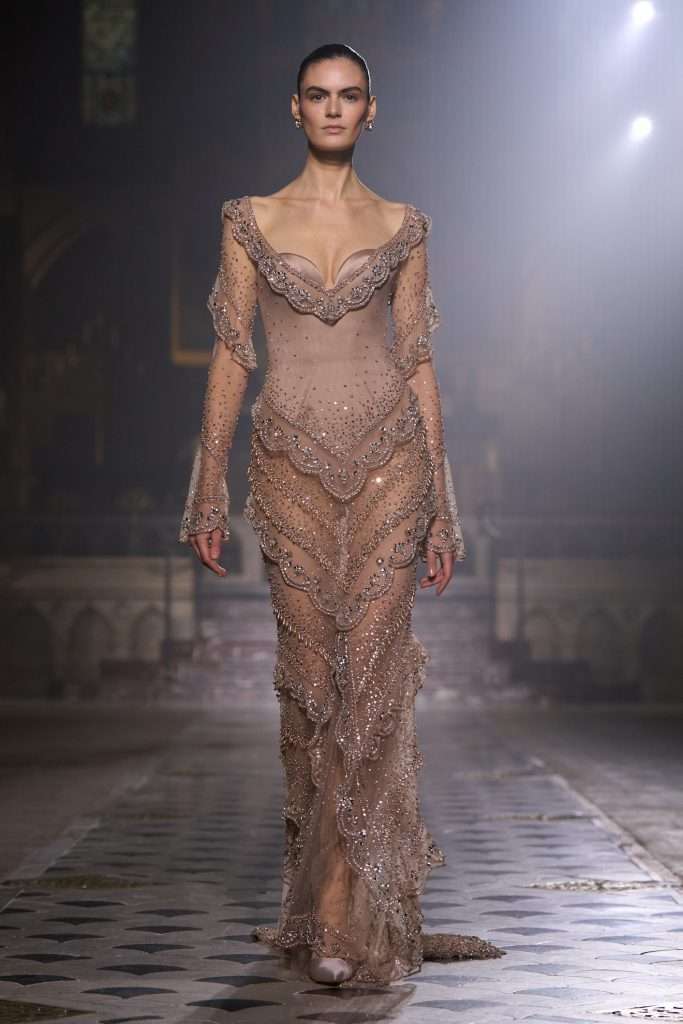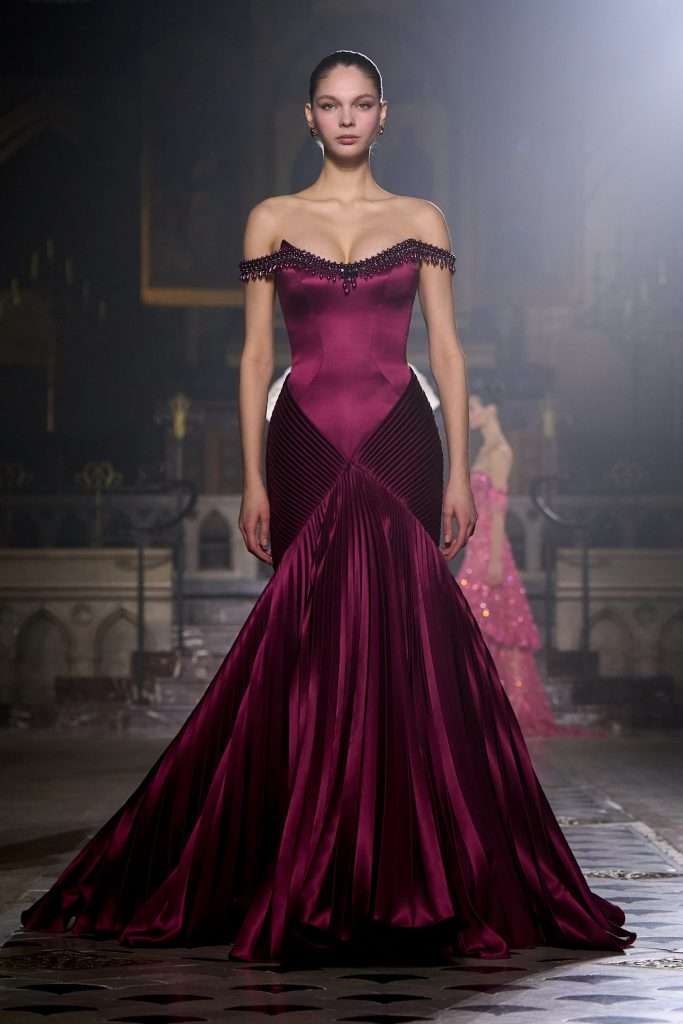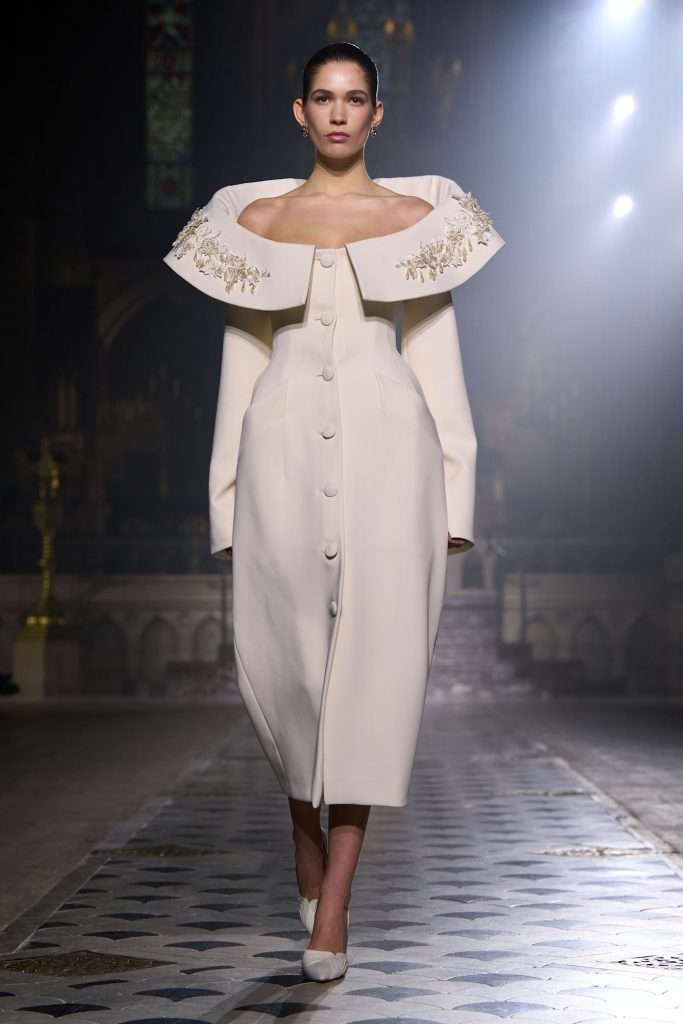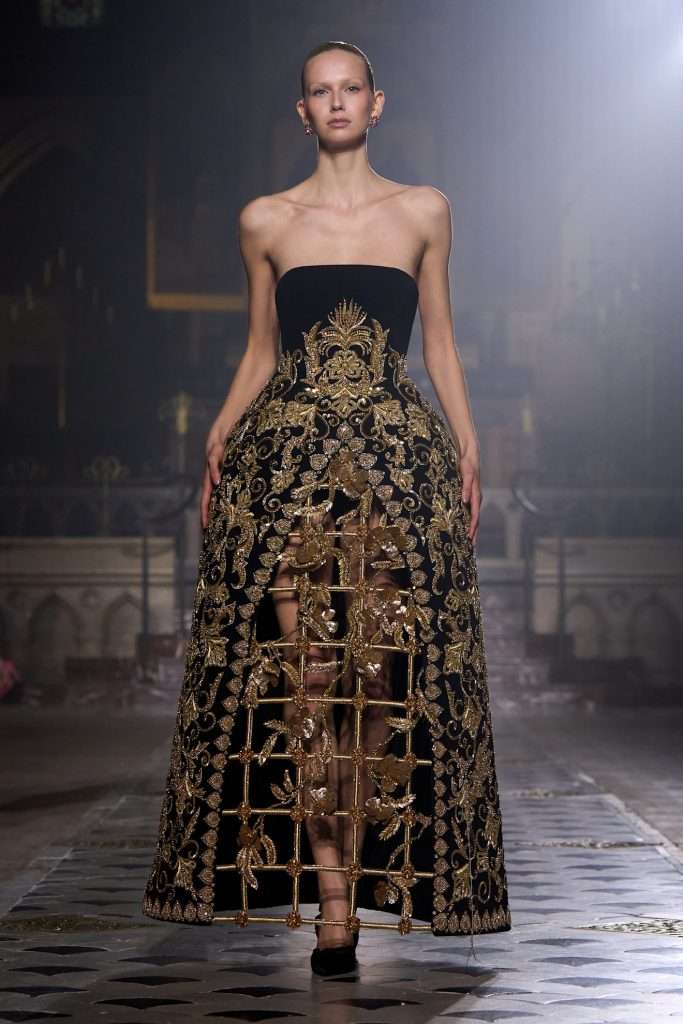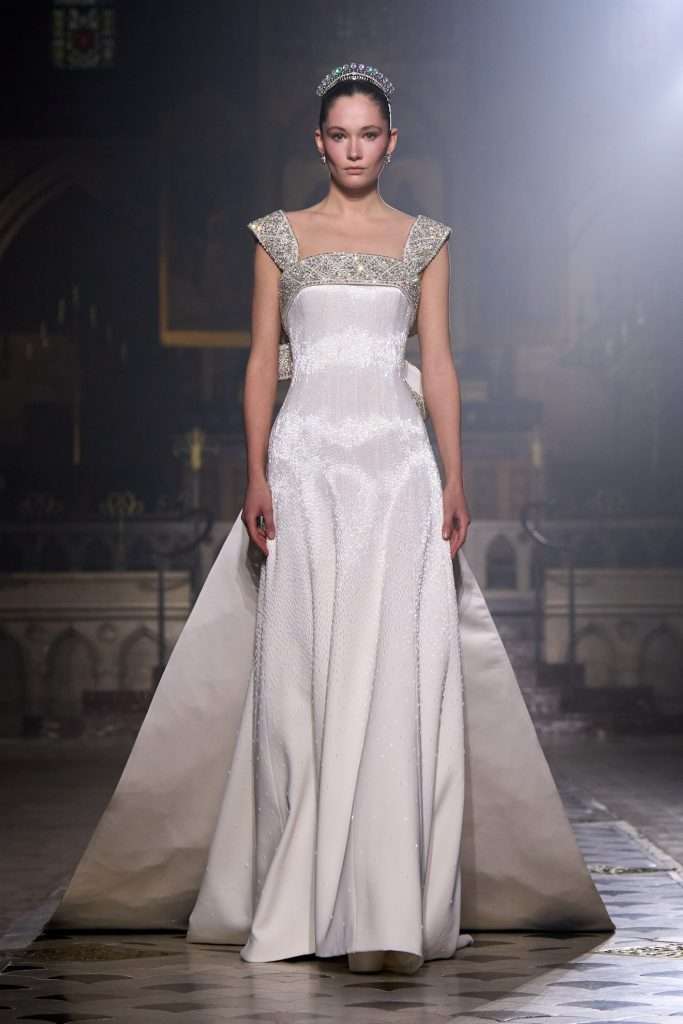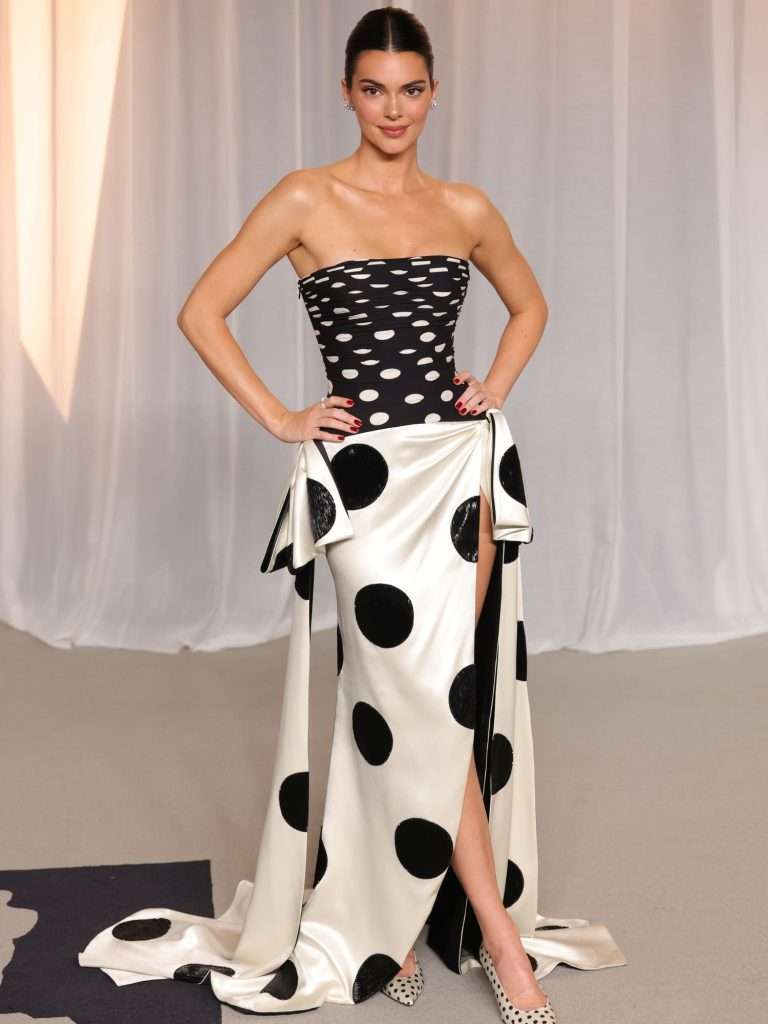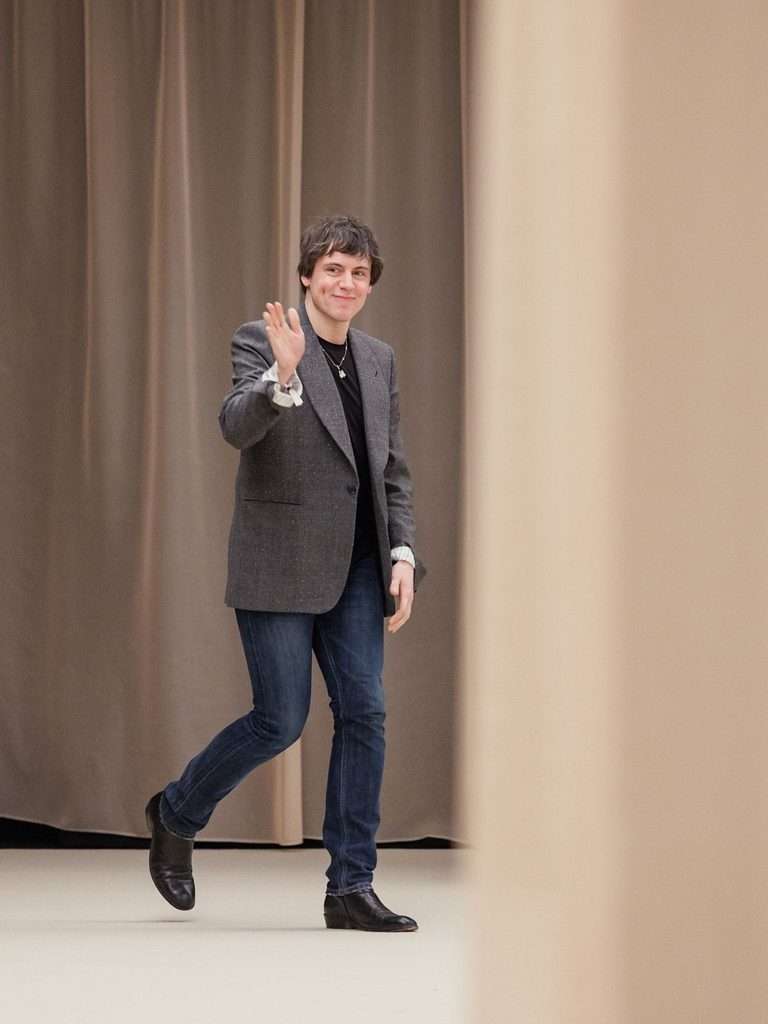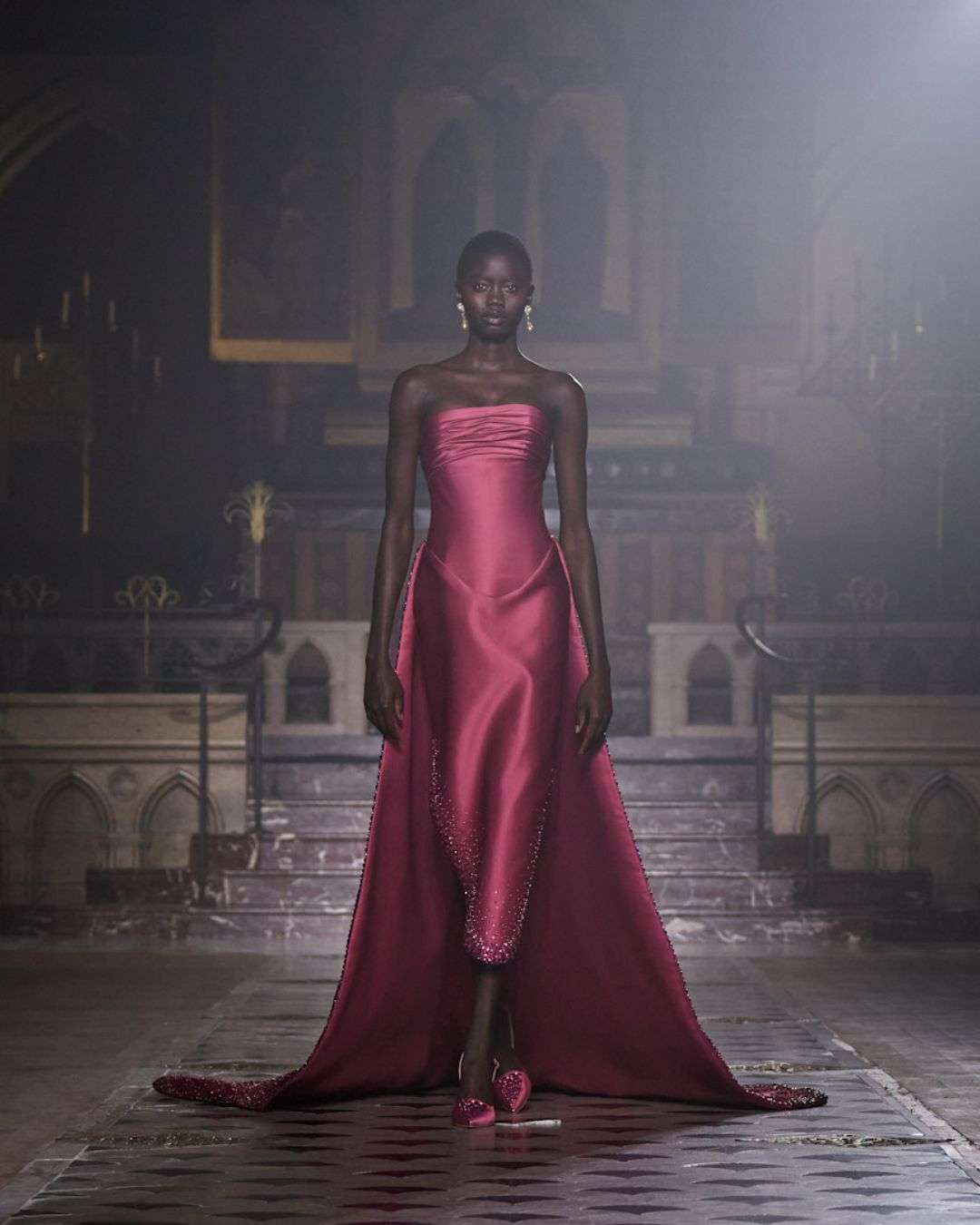
February is nearly here, and as Valentine’s Day approaches, love is often reduced to clichés – roses, chocolates, predictable gestures. Yet yesterday, Georges Hobeika’s Spring/Summer 2026 haute couture collection reminded us that love can also be worn – and we could not be more on board. On the Paris runway, organza, satin, and tulle were transformed into garments that seemed to hold, cradle, and even pulse with emotion.
At the heart of the collection lies a reflection on love as an active, shared force, rather than a static ideal. Hobeika and his son Jad interpret this concept through structure and form: corseted bodices rise like protective shells, skirts ripple like tidal arcs, and layers of fabric seem to embrace the body as if it were a vessel of memory and feeling. Instead of literal motifs, the garments suggest emotional landscapes, inviting viewers to consider how affection can inhabit space, shape and movement.

The collection’s silhouettes blend architecture and organic geometry. Some gowns curve like shells or spiral like unfurling petals, balancing firmness and fluidity, containment and release. The human form is both instrument and canvas: movement animates the dresses, revealing tension, elasticity and resonance. Hobeika’s designs are not static objects but entities in dialogue with the body, where every turn, pause, or gesture transforms the work into a fleeting, living statement.
Materials interact with light, shadow and motion to reinforce the collection’s conceptual depth. Stiff satins juxtapose diaphanous organza; embroidery and subtle embellishments appear to grow naturally from the fabric rather than being applied, lending a sense of inevitability to the design. Each seam, fold and drape is carefully considered to negotiate weight, volume and the rhythm of movement, making the clothing feel both intimate and architectural.
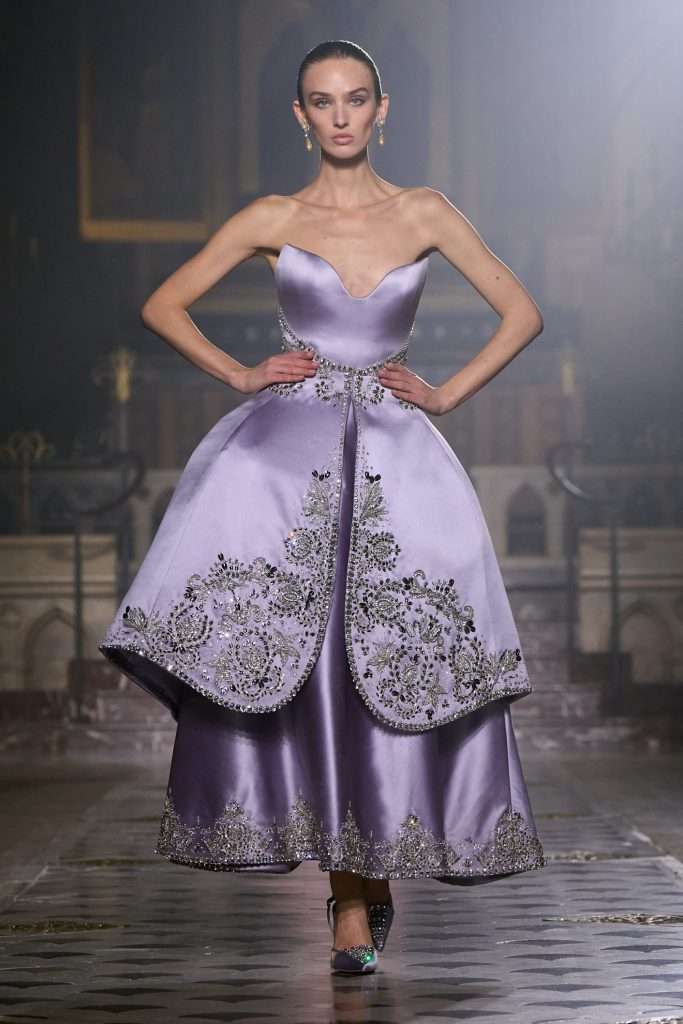
Though there could be echoes of marine life, petals and coral structures, the effect remains abstract. These analogies underline Hobeika’s interest in biomorphic form and visual metaphor, translating emotion into a tactile, observable experience. The collection embodies tension and harmony simultaneously, offering an exploration of love that is as intellectual as it is sensory.
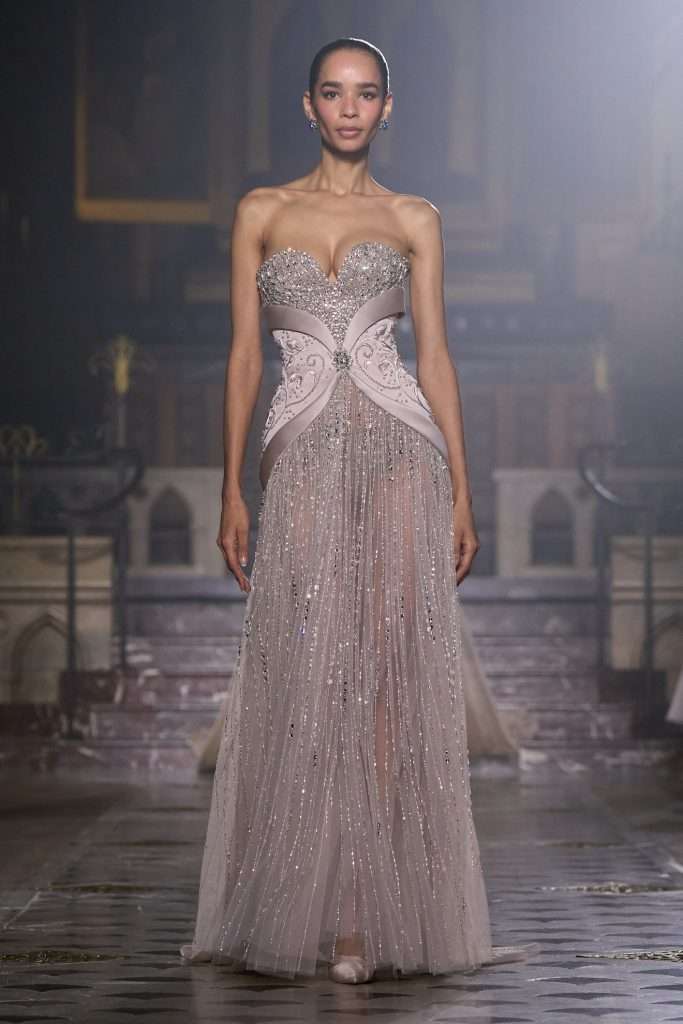
Within the broader Paris Haute Couture Week, Hobeika’s collection stands apart for its restraint and thoughtfulness. While some houses leaned into overt theatricality or historical storytelling, Hobeika focuses on internal narrative and sculptural impact, letting the garments themselves articulate their conceptual weight. In doing so, he demonstrates that couture can be both introspective and expressive, suggesting rather than dictating.