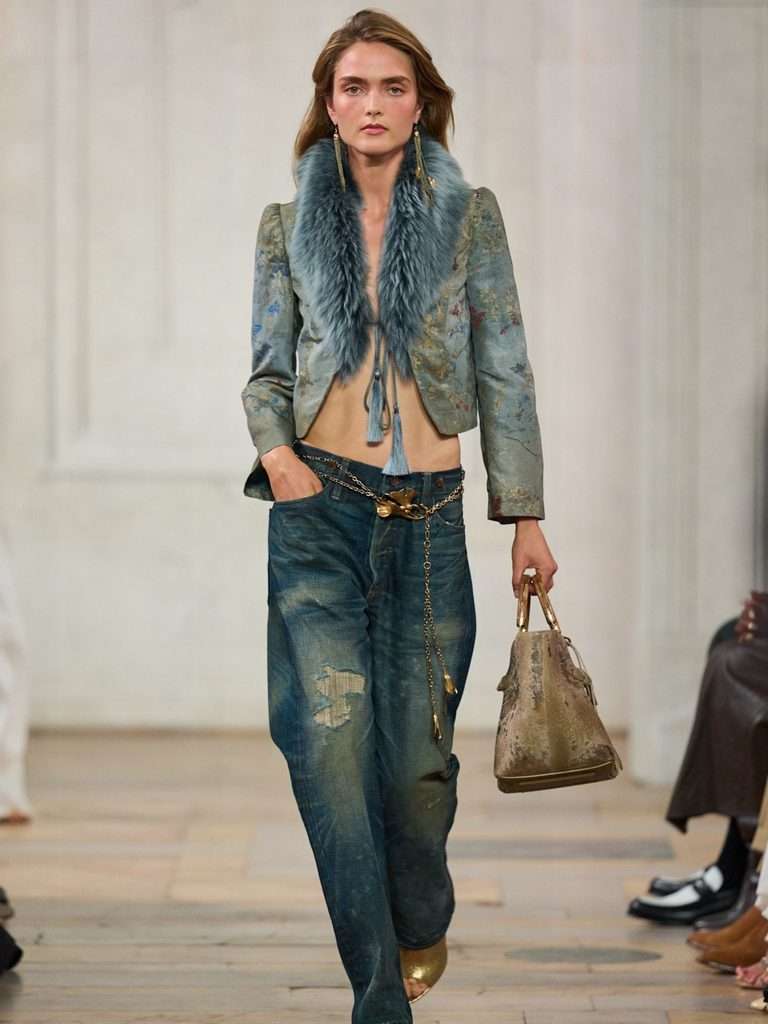

Craftsmanship luxury brands are the houses that still make their defining pieces by hand, in workshops they own, with artisans they train themselves. Hermès, Chanel, Louis Vuitton, Bottega Veneta, Loro Piana, Rolex and Cartier lead the 15 covered here. The proof is rarely romantic. One Hermès artisan spends 15 to 20 hours assembling the 36 parts of a Kelly bag, and Chanel keeps eleven specialist workshops under one roof in Paris so that embroidery and featherwork do not die out. Below: what the word means, which houses earn it category by category, where each one falls short, and a five-point check that works in any boutique. One of the most respected names here barely uses hand tools at all.
What Defines Craftsmanship in Luxury Brands
Craftsmanship in luxury is the combination of rare materials, trained hands and time, controlled by the house from raw material to final finish. It is the difference between a bag that is assembled and one that is made.
Craftsmanship in luxury fashion is easy to claim and hard to fake. Heritage houses earn the word by owning the difficult parts. Hermès runs its own leather workshops across France. Chanel owns the embroiderers who decorate its jackets. Rolex casts its own gold. Control matters because every stage handed to an outside supplier is a stage the house can no longer vouch for.
Four things hold the definition up.
- Materials: the best houses buy rare leathers, long-staple fibres and precious metals, then reject far more than they keep. Provenance is documented now too, because buyers want to know where the hide and the gold came from.
- Technique: saddle stitching, hand engraving, Lunéville embroidery and bespoke tailoring are learned over years at the bench. At Hermès and Bottega Veneta a bag is typically built by one artisan from start to finish.
- Time: a couture dress can absorb anywhere from around a hundred hours of handwork to close to two thousand. A single Van Cleef & Arpels Mystery Set clip takes roughly 300.
- Transmission: a technique that is not taught disappears with the person who holds it, which is why the serious houses now run their own schools.
Most shoppers miss the next part. A high price tells you how a brand is positioned. It tells you nothing about how the piece was made. What you can trust is consistency under close inspection: even stitch length, clean edge paint, symmetry in the places where symmetry is hard.

Savoir-Faire, Métiers d’Art and Bespoke: What the Terms Mean
Savoir-faire translates as know-how, and in luxury it refers to a specific skill held by specific people, such as hand-rolling the edge of a silk scarf. Métiers d’art are the independent specialist workshops (embroiderers, feather workers, pleaters, milliners) that supply haute couture and high jewellery.
Three more terms are worth knowing before you walk into a boutique.
- Bespoke: a new pattern or last is cut for one client.
- Made-to-measure: an existing house pattern is adjusted to your measurements.
- Hand-finished: the piece was made largely by machine and completed by hand. It is honest wording, and it is not the same as handmade.
With the vocabulary settled, the names come next.
Heritage Luxury Brands Known for Craftsmanship: 15 Houses at a Glance
The heritage luxury brands most associated with craftsmanship are Hermès, Chanel, Rolex, Louis Vuitton and Baccarat, and the full list below runs to 15 houses across leather, clothing, shoes, watches, jewellery and crystal. Each treats technique as an asset to protect, which means training artisans in-house and keeping core production in its own workshops.
To make this list a house had to pass three tests. It makes its signature product in workshops it owns or directly controls. It trains its own artisans. And it will repair what it sells. Fame was not a criterion, which is why a Tokyo shoemaker founded in 2010 sits beside a crystal works founded in 1764.
The table sets out what each house is built on and where it is strongest.
| House | Founded | Base | Signature craft | Strongest in |
|---|---|---|---|---|
| Hermès | 1837 | France | Saddle-stitched leather, silk | Structured leather bags |
| Louis Vuitton | 1854 | France | Trunk making | Trunks and special orders |
| Bottega Veneta | 1966 | Italy | Intrecciato woven leather | Soft woven bags |
| Loewe | 1846 | Spain | Complex leather pattern cutting | Sculptural leather bags |
| Chanel | 1910 | France | Couture, embroidery, tweed | Jackets and couture |
| Brunello Cucinelli | 1978 | Italy | Cashmere knitwear | Knitwear and soft tailoring |
| Loro Piana | 1924 | Italy | Rare fibres, weaving, finishing | Coats and knitwear |
| Tiffany & Co. | 1837 | United States | Diamond setting, silversmithing | High jewellery and silver |
| The Row | 2006 | United States | Unbranded tailoring and leather | Coats and tailoring |
| John Lobb | 1866 | United Kingdom | Bespoke shoemaking | Welted men’s shoes |
| Hender Scheme | 2010 | Japan | Vegetable-tanned leather | Shoes that patina |
| Rolex | 1905 | Switzerland | In-house watchmaking | Robust sports watches |
| Cartier | 1847 | France | Jewellery, glyptics, enamel | High jewellery |
| Van Cleef & Arpels | 1906 | France | Mystery Set gem setting | Floral high jewellery |
| Baccarat | 1764 | France | Mouth-blown, hand-cut crystal | Lighting and barware |
Read down the last column before anything else. No house is equally strong at everything, and the most common buying mistake is choosing a brand for its reputation in one category and then buying from it in another.
Fashion Brands Known for Artisan Production in Leather Goods
The fashion brands best known for artisan production in leather goods are Hermès, Louis Vuitton, Bottega Veneta and Loewe, four houses that still cut, stitch and finish their signature bags by hand in their own ateliers. Leather is the most honest material in luxury, because flaws in cutting, skiving and stitching show at once and cannot be hidden behind hardware.
Behind every leather house is a workshop few customers ever see. Cutters who can read a hide for weak grain. Edge painters who build colour in thin layers and let each one dry. Stitchers who have held an awl at the same angle for decades. These are the people who carry the brand, and these are the luxury fashion brands where traditional craftsmanship is still the production method and not the campaign. For how construction changes from one silhouette to the next, see our glossary of the types of handbags.
Hermès (France)
Hermès opened in Paris in 1837 as a harness and saddle workshop, and the saddle stitch is still the basis of everything it makes in leather. One artisan assembles the 36 parts of a Kelly bag over 15 to 20 hours, then stamps it with a code that identifies the maker and the year, so the same hands can repair it later. In 2021 the house opened its own apprenticeship school, the École Hermès des savoir-faire.
- Strongest in: structured leather bags, saddlery and silk.
- Worth knowing: supply is deliberately limited, and the most requested bags are offered to established clients, not sold on request.
Louis Vuitton (France)
Louis Vuitton began in 1854 as a trunk maker, a malletier, and that discipline still shows in the corners, the locks and the way a hard-sided case closes. More than 300 artisans work at the Asnières atelier outside Paris, once the founding family’s home, on trunks, special orders and leather goods. A single bag can involve upwards of 200 steps.
- Strongest in: trunks, hard-sided luggage and special orders.
- Worth knowing: the famous Monogram is coated canvas, not leather. It wears hard, but the fullest expression of the house’s craft is in its trunks and all-leather lines.

Bottega Veneta (Italy)
Founded in Vicenza in 1966, Bottega Veneta built its name on intrecciato, thin strips of leather woven by hand into a panel that is both supple and strong. The weave began as a workaround, since the sewing machines in local workshops could not handle heavy hides. A bag is still typically made from start to finish by one artisan at the atelier in Montebello Vicentino. There is no logo on the outside. The weave does that job.
- Strongest in: soft woven bags and small leather goods.
- Worth knowing: nappa this soft marks more easily than grained calfskin, so a woven bag rewards a careful owner.
Loewe (Spain)
Loewe grew out of a collective of leather craftsmen working in Madrid in 1846. Its Puzzle bag is cut from 75 separate pieces of leather and sewn so that it folds flat. Since 2016 the Loewe Foundation Craft Prize has put makers in ceramics, textiles and wood from more than 100 countries in front of an international jury, which says a good deal about how the house sees itself.
- Strongest in: sculptural leather bags with complex pattern cutting.
- Worth knowing: the most experimental seasonal pieces are closer to art objects than daily workhorses. The long-running styles are the safer buy.
Leather shows its flaws at once. Cloth hides them for a season or two, which makes clothing harder to judge.
Luxury Clothing Brands Known for the Best Craftsmanship
For clothing, the luxury brands with the deepest craftsmanship are Chanel for couture and embroidery, Brunello Cucinelli for knitwear and soft tailoring, and Loro Piana for the raw fibre itself. Ready-to-wear is where luxury fashion craftsmanship is hardest to verify, because marketing and making drift furthest apart. These three are chosen for what they own, not for what they advertise.
Chanel (France)
Beyond the tweed and the camellias, Chanel owns the workshops that make couture possible. It began buying them in the mid-1980s, when several faced closure for lack of successors, and in December 2021 it opened le19M in the nineteenth arrondissement of Paris. Eleven maisons d’art work there, close to seven hundred artisans, among them the embroiderer Lesage and the feather and flower house Lemarié, founded in 1880.
- Strongest in: tweed jackets, couture and anything embroidered.
- Worth knowing: the full weight of that craft sits in the couture and Métiers d’art collections. Seasonal ready-to-wear is well made, but it is not where the hours go.
Brunello Cucinelli (Italy)
Brunello Cucinelli built a knitwear company in the medieval hamlet of Solomeo in Umbria and restored the village around it. In 2013 he opened the School of Contemporary High Craftsmanship and Arts there to teach cutting, mending, pattern making and tailoring. The founder calls the model humanistic capitalism. In practice it means the village, the school and the workshops are run as one project.
- Strongest in: cashmere knitwear, unstructured jackets and tonal layering.
- Worth knowing: the palette rarely leaves beige, grey and navy. If you want colour, look elsewhere.
Loro Piana (Italy)
Loro Piana has traded wool from Piedmont since 1924 and is unusual in starting upstream of the garment. It buys vicuña in the Andes, baby cashmere from Mongolia and northern China, and the finest merino from Australia and New Zealand, then spins, weaves and finishes the cloth in its own Italian mills. A stylist’s rule of thumb applies here: when the cloth is this good, the cut can stay simple.
- Strongest in: coats, knitwear and anything where the fabric does the talking.
- Worth knowing: the design is intentionally quiet. You are paying for fibre and finishing, and nobody across the room will know.
That restraint is not only Italian. It has a strong following across the Atlantic too.
American Luxury Brands Known for Craftsmanship and Quality
The American luxury brands most respected for craftsmanship and quality are Tiffany & Co. for jewellery and silver, and The Row for tailoring and leather, joined by a growing number of independent workshops. American luxury has shed its old reputation for being all marketing and no making.
Tiffany & Co. (United States)
Tiffany & Co. was founded in New York in 1837 and keeps around 1,500 artisans in-house. Diamonds on its signature pieces are set by hand, and it is one of the few large jewellers that still engraves by hand. Each year its silversmiths make the trophies for the Super Bowl and the US Open using traditional techniques.
- Strongest in: diamond setting, silver and engraving.
- Worth knowing: the sterling silver collections and the high jewellery come from very different benches. The craft story belongs mostly to the second.
The Row (United States)
Mary-Kate and Ashley Olsen founded The Row in 2006 and stripped luxury back to fabric, fit and finish, with no visible branding at all. Much of its tailoring and leather is made in Italy. It is the label most often named as the starting point of quiet luxury.
- Strongest in: coats, tailoring and unbranded leather bags.
- Worth knowing: the house says very little in public about its workshops, so you judge it by the garment in your hands and nothing else.
Below the well-known names, independent leather makers and selvedge denim ateliers, often a single workshop deep, now match European houses on construction while keeping production at home. For a buyer who cares about provenance, this is the corner to watch.
One practical point when buying from an American luxury brand: ask where the piece was made. Several American labels design at home and manufacture in Italy. Both routes can be excellent, but you should know which one you are getting.
Luxury Shoe Brands Where Handmade Still Means Handmade
The reference points for handmade luxury shoes are John Lobb in Britain and Hender Scheme in Japan, one bespoke and traditional, the other modern and built on vegetable-tanned leather. Shoes are the one category where repairability is visible in the construction: a welted sole can be replaced, a glued one usually cannot.
John Lobb (United Kingdom)
John Lobb is the reference for bespoke British shoemaking, with roots going back to 1866. A bespoke pair begins with a wooden last carved to the client’s foot, then moves through hand welting and finishing over many weeks. The shoes can be resoled for decades.
- Strongest in: bespoke and Goodyear-welted men’s shoes.
- Worth knowing: two businesses share the name. The family-owned London workshop makes bespoke only, while the ready-to-wear line, made in Northampton, has belonged to Hermès since 1976.
Hender Scheme (Japan)
Founded in Tokyo in 2010 by Ryo Kashiwazaki, Hender Scheme works in the spirit of shokunin, the artisan’s lifelong pursuit of one skill. Its pieces are made from untreated vegetable-tanned leather in small workshops in the Asakusa district, and they are designed to darken with wear until the object records its owner.
- Strongest in: leather shoes and small objects that age visibly.
- Worth knowing: the pale leather starts almost raw. If you want a shoe that looks new in five years, this is the wrong maker.
The next category measures its craft in fractions of a millimetre.
Watches, Jewellery and Crystal: Craft Beyond the Wardrobe
In watches, jewellery and crystal, the houses with the strongest craft records are Rolex, Cartier, Van Cleef & Arpels and Baccarat. These are the categories where hand skill and machine precision work side by side, and where pretending otherwise is a warning sign.
Rolex (Switzerland)
Hans Wilsdorf founded the company in London in 1905, and it has been Swiss for most of its life since. Rolex is the most industrial house on this list and does not hide it. It runs its own foundry for gold, makes its movements in-house, and tests every finished watch to a tolerance of minus two to plus two seconds a day. Yes, a Rolex is largely machine made. But a machine holds a tolerance no hand can, and assembly and final regulation are still done by watchmakers. For the hand-finished end of the trade, see our guide to watch complications.
- Strongest in: robust, accurate, serviceable sports watches.
- Worth knowing: if hand decoration matters to you, the smaller manufactures of Geneva and the Vallée de Joux do far more of it.
Cartier (France)
Founded in Paris in 1847, Cartier is known for the Love bracelet and the Tank watch, but its rarest work is glyptics, the carving of hard stones. It has run an in-house atelier for the craft since 2010. Its Maison des Métiers d’Art in Switzerland brings enamelling, marquetry and granulation together in one restored farmhouse.
- Strongest in: high jewellery, shaped watch cases and rare decorative crafts.
- Worth knowing: the best-selling bracelets are precisely engineered and largely machine made. The handwork lives in high jewellery and the Métiers d’Art watches.
Van Cleef & Arpels (France)
Van Cleef & Arpels opened on Place Vendôme in 1906. Its Mystery Set, patented in 1933, grooves each stone and slides it onto gold rails so that no metal shows from the front. A stone can take up to eight hours to cut, and a single clip about 300 hours to finish. Very few workshops anywhere can do it.
- Strongest in: invisible setting and floral high jewellery.
- Worth knowing: the Alhambra pieces most people know are simpler by design. They are beautifully finished, but they are a different order of work from the Mystery Set.
Baccarat (France)
Baccarat has made crystal in Lorraine since 1764. Each chandelier and decanter is mouth blown and hand cut, and the most complex pieces take months. The works has trained an unusually high number of Meilleurs Ouvriers de France, the state title for master craftspeople.
- Strongest in: cut crystal, lighting and barware.
- Worth knowing: lead crystal is heavy and chips if knocked. It is made to be used, carefully.
Some of these houses are centuries old. The ones below prove that age is not the point.
Brands That Combine Traditional Craftsmanship With Modern Design
The brands that combine traditional craftsmanship with modern design most convincingly are Loewe, Bottega Veneta, Brunello Cucinelli and The Row. They take techniques that are decades or centuries old and apply them to contemporary shapes, without letting the machine touch the part that matters.
The pattern is consistent. Loewe cuts a bag the way you would fold origami. Bottega Veneta scales its weave up into oversized knots and cushions. The Row removes everything except fabric and fit. None of it looks old, and all of it depends on old skills. The same thing is happening with traditional embroidery in modern fashion, where hand techniques now turn up on technical fabrics.
Modern tools are used with restraint. Houses scan a foot in 3D to refine a last, or test a bag’s structure digitally before a hide is cut, then hand the result to an artisan to finish.
It is tempting to conclude that handmade always beats machine made. Yes, a hand-sewn seam is stronger. But a machine-cut watch part is more accurate than any hand could make it, and a laser cuts a pattern with less waste. The honest houses use each where it is better, and say so.
All of this depends on people, and people retire.
How Luxury Houses Train the Next Generation of Artisans
Artisan training is now the clearest sign that a luxury brand invests in its craft, and the houses leading it are Hermès, Chanel, the LVMH group, Brunello Cucinelli and Bottega Veneta. A workshop without apprentices has a closing date.
Think of a luxury house as a restaurant kitchen. The name above the door matters less than who is standing at the stove, and whether anyone is being taught to take over.
These are the programmes worth knowing by name.
- Hermès: the École Hermès des savoir-faire, opened in 2021, trains and certifies leather workers inside the company.
- Chanel: le19M in Paris gathers eleven maisons d’art and close to seven hundred artisans in one building, across more than thirty specialisms.
- LVMH: the Institut des Métiers d’Excellence, launched in 2014, runs paid apprenticeships in leather, jewellery, tailoring and watchmaking across the group’s houses, Louis Vuitton and Loro Piana among them.
- Brunello Cucinelli: the Solomeo school has taught tailoring, mending and pattern making since 2013.
- Bottega Veneta: the Accademia Labor et Ingenium opened in the Veneto in 2023 to train leather artisans for the house.
When you are weighing two houses, ask which one can name its school. It is the question a marketing department finds hardest to answer without one.
Schools cluster where the skills already live, which is why geography still matters.
The Countries Most Famous for Luxury Craftsmanship
Craftsmanship in luxury goods is concentrated in a handful of regions, led by France, Italy, Switzerland, Britain and Japan, because skills cluster where suppliers, schools and workshops have sat side by side for generations.
Knowing the map helps you read a label. These are the places that matter most.
- France: couture and its métiers d’art in Paris, leather goods in workshops across the regions, crystal in Lorraine, porcelain in Limoges.
- Italy: leather goods around Florence and Scandicci, wool and cashmere in Biella, jewellery in Valenza, shoes in the Marche and along the Riviera del Brenta.
- Switzerland: watchmaking in Geneva, the Vallée de Joux and La Chaux-de-Fonds.
- Britain: bespoke tailoring on Savile Row and welted shoes in Northampton.
- Japan: selvedge denim in Okayama, leather in the Asakusa district of Tokyo, indigo dyeing in Tokushima.
- Spain: leather in Ubrique, the Andalusian town whose workshops sew for several of the big European houses.
A country of origin narrows the odds. It does not settle the question, and the next section explains why.
How to Spot Genuine Craftsmanship Before You Buy
To find luxury pieces built with real artisanal craftsmanship, judge the object and not the boutique: materials, finishing, evidence of handwork, repairability and provenance. Genuine craft survives close inspection. Use this five-point check before you commit.
- Material quality: full-grain leather, solid precious metal and dense natural fibre age well. Bonded leather, plating and synthetic blends do not. Ask what the piece is made of, and notice how confidently the answer comes.
- Attention to detail: look for even stitch length, clean edge paint and patterns that line up across a seam. Rushed seams and a crooked logo are the signs of mass production wearing a luxury label.
- Evidence of handwork: saddle stitching, hand-set stones and a maker’s mark all point to a real artisan. Uniform machine stitching is fine, but it is not the same thing.
- Longevity and repairability: the best houses will resole, restitch and restore. A brand that repairs for life expects the piece to last that long.
- Provenance and signature: a date stamp, an atelier code or a registered serial number confirms where and when a piece was made. No serious house hides this.
You might be thinking that a Made in Italy or Made in France label settles all this. It does not. The label records where the last substantial work took place, not who did it or under what conditions. Italian court cases in 2024 and 2025 put subcontracted workshops supplying well-known labels under scrutiny, a reminder that the label in the lining and the workshop behind it can be far apart.
The short version: if a brand cannot tell you who made the piece, where, and how it can be repaired, you are probably paying for the logo and not the labour.
Why Well-Made Luxury Holds Its Value Over Time
Pieces from craftsmanship luxury brands hold their value because they can be repaired, they age well, and the resale market recognises the difference.
Repair comes first. Hermès runs its own restoration service. John Lobb resoles. Rolex services watches that are decades old. A house that maintains what it sells is telling you how long it expects the piece to live. Your part is simple: care for a leather bag properly in its first year and it will look better in its tenth.
Resale comes second. Demand for pre-loved luxury is concentrated in a small number of names, Hermès, Chanel, Rolex and Cartier among them, and they are the same names that lead on craft. That is no accident. Only an object that survives twenty years of use can be sold after twenty years.
You might be thinking this only matters to collectors. It matters more to the person who buys one good coat and wears it for fifteen winters. Set the hours of work in the garment against the hours you will spend in it and the argument makes itself.
Whether that stays true depends on what happens in the workshops over the next decade.
The Future of Luxury Craftsmanship
The future of luxury craftsmanship depends on three things: provable provenance, repair as a service, and whether enough young people choose the bench.
Provenance is becoming a product feature. The Aura Blockchain Consortium, founded in 2021 by LVMH, Prada Group and Cartier, issues digital certificates that follow a product through its life, and the European Union’s planned digital product passports will push the rest of the industry the same way.
Buyers are changing how they research too. In 2026 a question typed into an AI assistant often comes before a visit to a boutique, and an assistant can only repeat what a house has stated plainly: who makes the piece, where, and how it is repaired. Vague heritage language does not survive that filter.
None of this changes the basic constraint. A saddle stitch still takes two needles and a person who has done it ten thousand times.
Why Craft Still Outlasts the Logo
Strip away the campaigns and the waiting lists and luxury comes down to a plain promise: someone skilled spent real time making something meant to last. The 15 houses here keep that promise in different accents, French, Italian, Swiss, British, American, Spanish and Japanese, and each keeps it better in some categories than in others.
So buy for the workshop and not for the logo. Know what the house is strongest in, check the piece with your own eyes, and ask who will repair it. People who shop that way rarely regret it.
Common Questions About Luxury Brands Known for Craftsmanship
Which luxury brands are known for generational craftsmanship?
Hermès, Chanel, Baccarat and John Lobb are among the strongest examples, because each trains artisans in-house and passes techniques from one generation to the next. Hermès and John Lobb still have a single maker build a bag or a bespoke shoe, while Chanel keeps heritage workshops alive through its Métiers d’art network.
What defines luxury craftsmanship for heritage fashion brands?
It is the combination of rare materials, hand skill and time, controlled from raw material to finishing. Heritage houses earn the term by keeping core production in their own ateliers and training artisans for years, instead of outsourcing the parts that define quality.
What luxury brands are considered the pinnacle of craftsmanship?
It depends on the category. Hermès leads for leather goods, Chanel for couture and embroidery, Loro Piana for fabric, John Lobb for bespoke shoes, Van Cleef & Arpels for high jewellery and Rolex for robust watchmaking. No single house leads in everything, so start with what you are buying.
How can you tell if a luxury brand genuinely invests in its artisans?
Look for three things: a named training school or apprenticeship scheme, production in workshops the brand owns, and a repair service. Hermès, Chanel, Brunello Cucinelli and Bottega Veneta all run their own schools. A brand that cannot say who made a piece, or where, is telling you something.